
Lighting
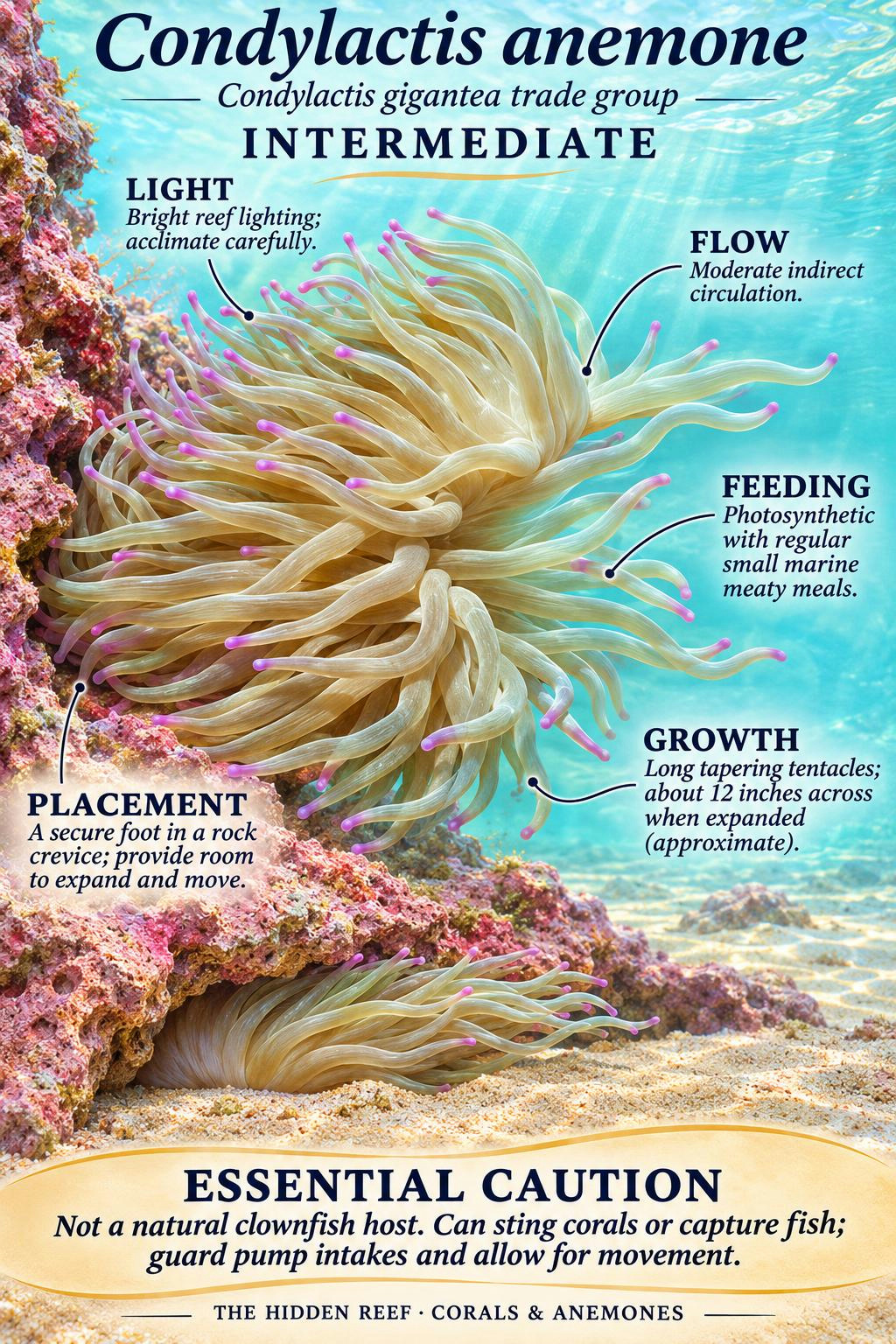
Bright reef lighting; acclimate carefully.
Water flow
Moderate indirect circulation.
Placement & space
A secure foot in a rock crevice; provide room to expand and move.
Feeding
Photosynthetic with regular small marine meaty meals.
Growth & adult form
Long tapering tentacles; an expanded animal can reach about 12 inches across.
Names you may see in stores
Often sold as Condy, pink-tip or Haitian reef anemone. Trade names and tentacle colors are not reliable species distinctions.
A stable reef comes first
Match the seller’s established conditions, acclimate gradually, and monitor temperature, salinity and water chemistry. Light and flow vary with the specimen and aquarium; these labels are starting guidance, not a universal setting.
Sources & review
Care summaries are synthesized from the references below. Difficulty and availability labels are editorial judgments; neither implies current store stock.
- LiveAquaria — Haitian reef anemone. Consulted November 15, 2026.
Illustration adapted with a real specimen reference: Wikimedia Commons specimen photo (Public domain). Colors and composition are illustrative, not a specimen for sale.