
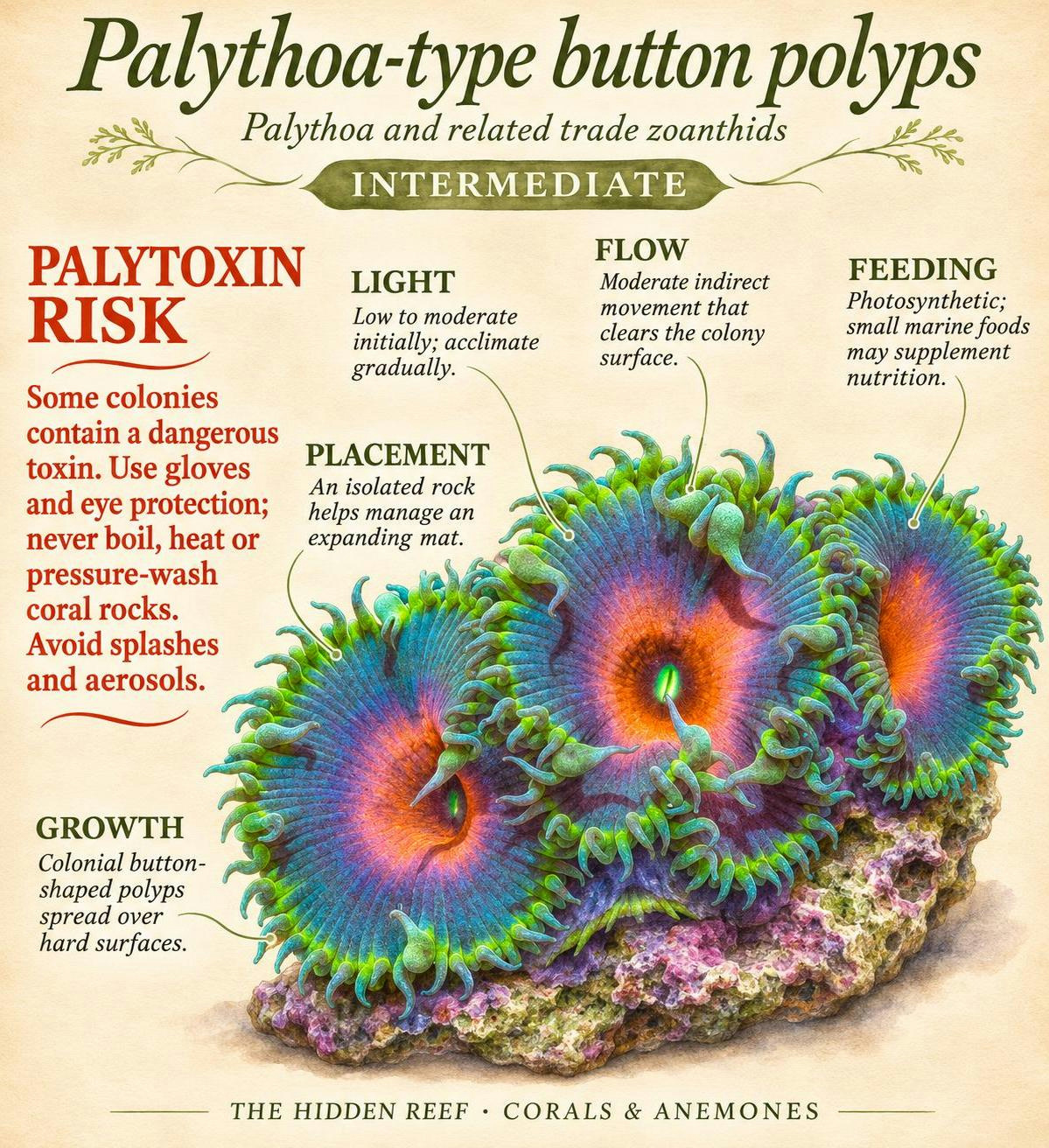
Lighting
Low to moderate initially; acclimate gradually.
Water flow
Moderate indirect movement that clears the colony surface.
Placement & space
An isolated rock helps manage an expanding mat.
Feeding
Photosynthetic; small marine foods may supplement nutrition.
Growth & adult form
Colonial button-shaped polyps spread over hard surfaces.
Names you may see in stores
Trade names and colors cannot establish species or toxin content. Seek urgent medical help after suspected exposure with symptoms, and mention palytoxin. Zoanthids are grouped with soft corals for browsing.
A stable reef comes first
Match the seller’s established conditions, acclimate gradually, and monitor temperature, salinity and water chemistry. Light and flow vary with the specimen and aquarium; these labels are starting guidance, not a universal setting.
Sources & review
Care summaries are synthesized from the references below. Difficulty and availability labels are editorial judgments; neither implies current store stock.
- Tidal Gardens — Stock captain america palythoas. Consulted November 15, 2026.
- CDC — Suspected palytoxin inhalation exposures associated with zoanthid corals. Consulted November 15, 2026.
Biological reference: Tidal Gardens specimen photograph. Independently composed educational illustration; the source photograph is not reproduced. Colors and composition are illustrative, not a specimen for sale.