What it eats
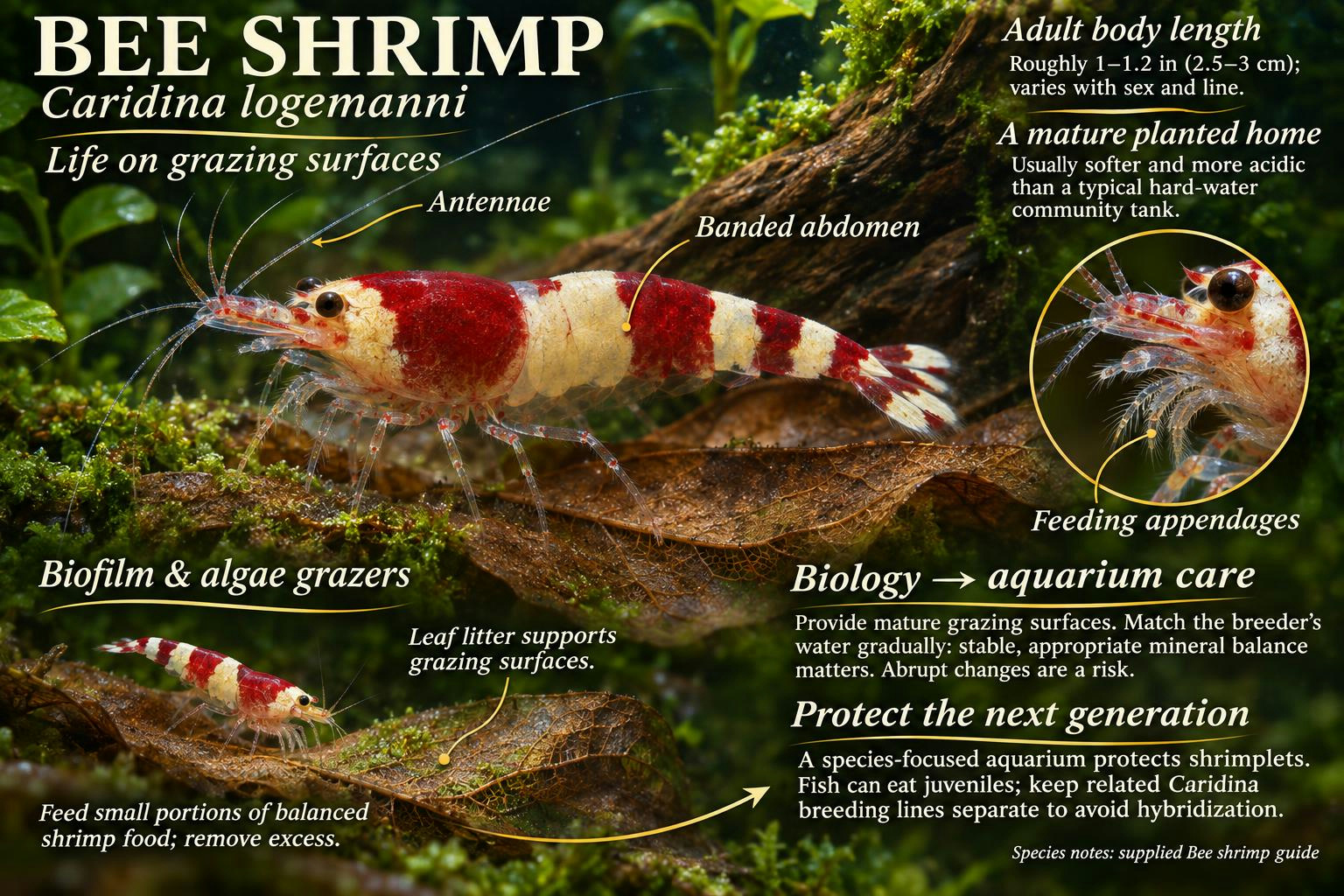
Graze biofilm and algae; supplement small portions of balanced shrimp food and remove excess. Leaf litter can support grazing surfaces.
Give it the right home
Mature planted shrimp setup, usually softer and more acidic than a typical hard-water community tank. Match the established line's conditions gradually.
Choose its neighbors
A species-focused aquarium protects shrimplets. Fish can eat juveniles; related Caridina can hybridize, so keep breeding lines separate.
Before adding it
Confirm the animal’s identity and your tank’s stability, feeding plan and compatibility. Ask about acclimation for its shipping conditions. Check medication labels carefully: treatments intended for fish may be unsafe for invertebrates.
Care references & identification notes
Care information reviewed November 17, 2026. Recommendations are a starting point, not a guarantee for every aquarium.
- Aquarium Breeder — Bee Shrimp – Detailed Guide: Care, Diet, and Breeding (care and feeding, compatibility cautions).
- World Register of Marine Species / MolluscaBase (taxonomic identity and synonyms).
Bee-shrimp care literature often uses the older broad Caridina cantonensis trade label. This guide covers C. logemanni and its selective strains, not every shrimp sold as a bee.
Illustrations use a specimen photograph as reference; colors and markings can vary. Care references are not stock listings.