What it eats
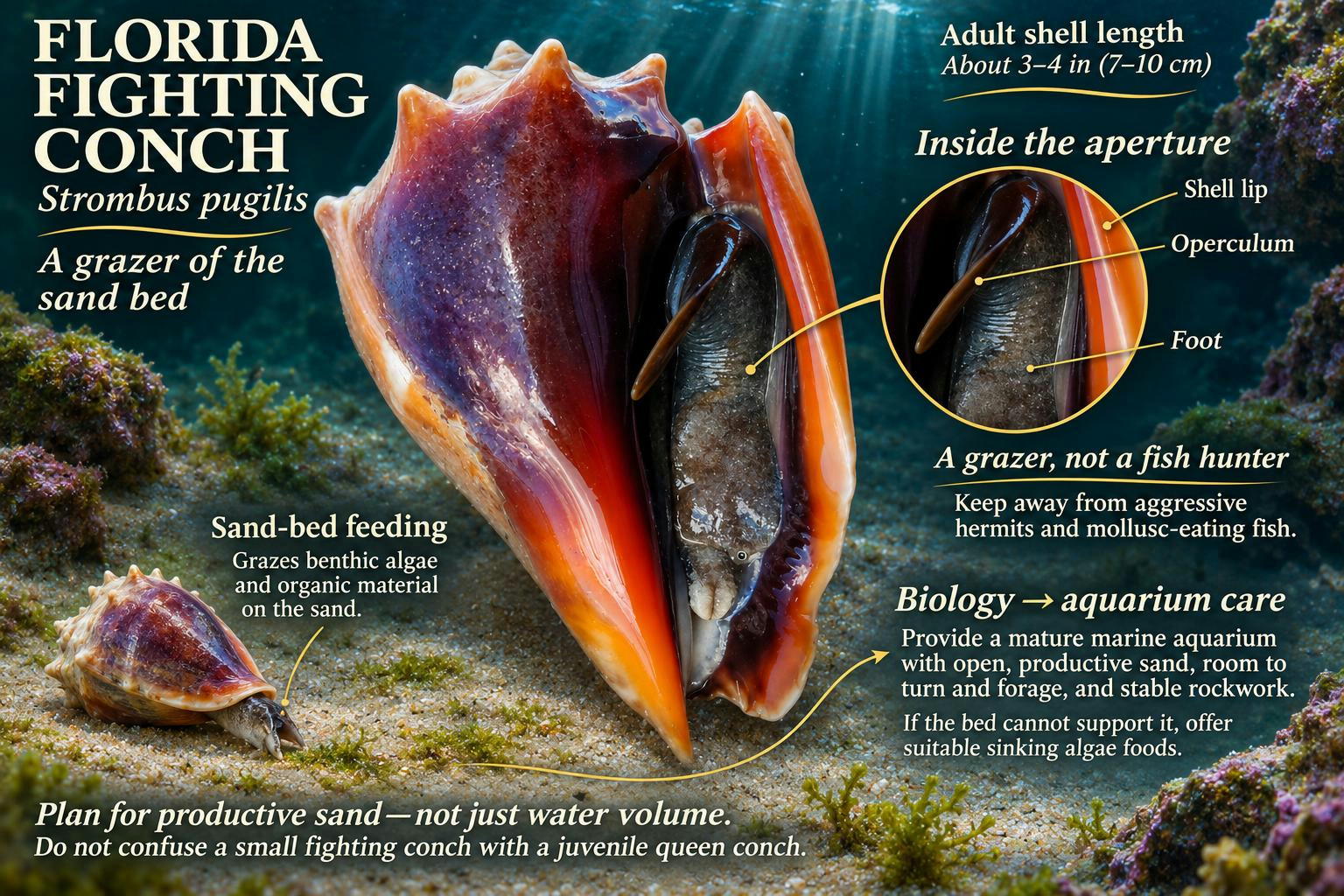
Graze benthic algae and organic material on the sand. Offer suitable sinking algae foods if the bed cannot support it.
Give it the right home
Mature marine aquarium with an open sand bed, room to turn and forage, and stable rockwork.
Choose its neighbors
Despite the common name, it is not a fish hunter. Keep it away from aggressive hermits and mollusc-eating fish.
Before adding it
Confirm the animal’s identity and your tank’s stability, feeding plan and compatibility. Ask about acclimation for its shipping conditions. Check medication labels carefully: treatments intended for fish may be unsafe for invertebrates.
Care references & identification notes
Care information reviewed November 17, 2026. Recommendations are a starting point, not a guarantee for every aquarium.
- Aquarium Breeder — Fighting Conch Snail – Detailed Guide: Care, Diet, and Breeding (care and feeding, compatibility cautions).
- World Register of Marine Species / MolluscaBase (taxonomic identity and synonyms).
Often sold as Strombus alatus (Florida fighting conch); WoRMS currently treats that name as a synonym of Strombus pugilis. This account concerns the fighting-conch trade animal, not queen conchs.
Illustrations use a specimen photograph as reference; colors and markings can vary. Care references are not stock listings.