What it eats
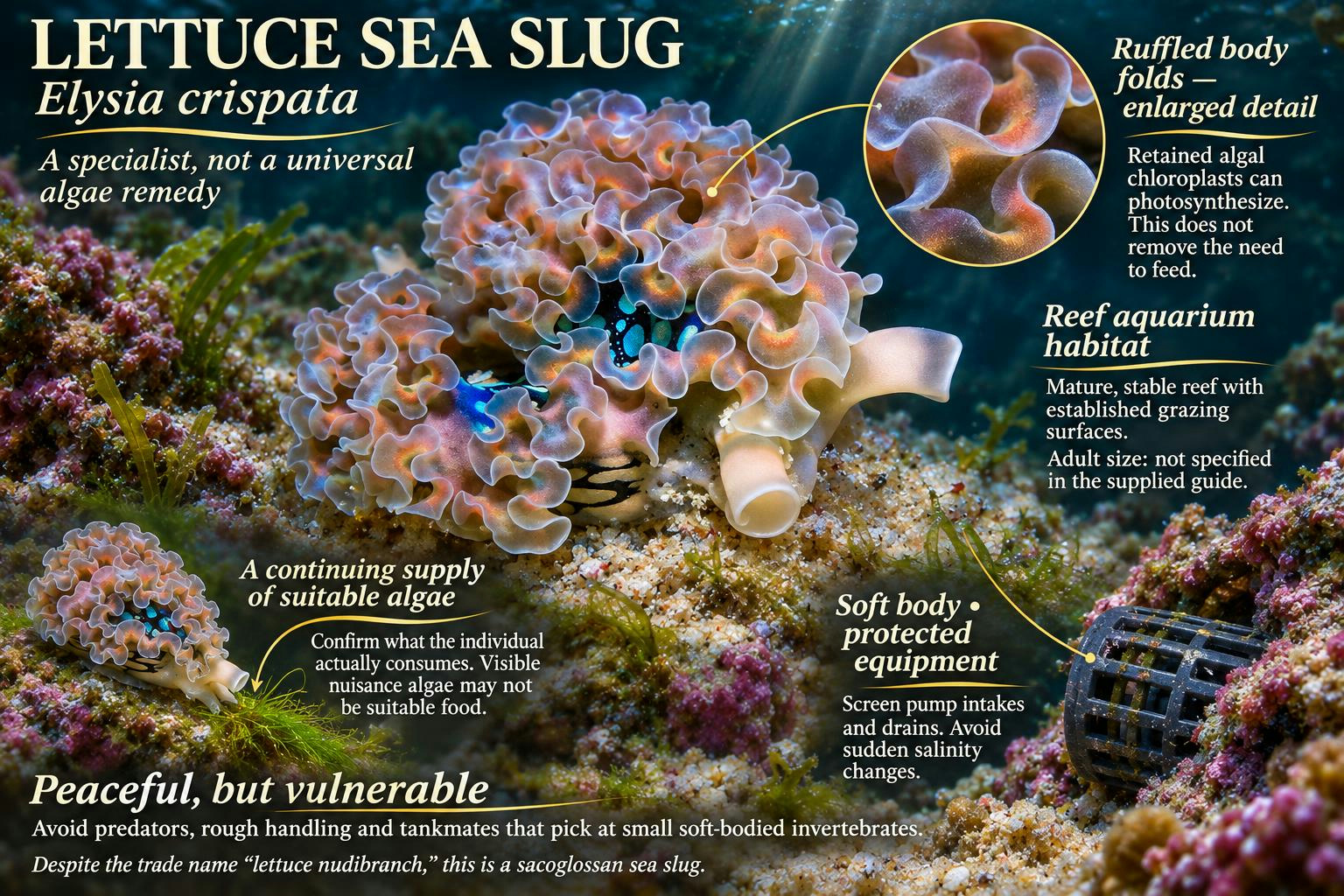
Needs a continuing supply of suitable algae. Confirm what the individual actually consumes; a tank with visible nuisance algae is not automatically a suitable food source. Photosynthesis from retained algal chloroplasts does not remove its need to feed.
Give it the right home
Use a mature, stable reef with established grazing surfaces. Screen pump intakes and drains, and avoid sudden salinity changes.
Choose its neighbors
Peaceful, but vulnerable to predators, rough handling and exposed equipment. Keep away from animals that pick at small soft-bodied invertebrates.
Before adding it
Confirm the animal’s identity and your tank’s stability, feeding plan and compatibility. Ask about acclimation for its shipping conditions. Check medication labels carefully: treatments intended for fish may be unsafe for invertebrates.
Care references & identification notes
Care information reviewed November 18, 2026. Recommendations are a starting point, not a guarantee for every aquarium.
- Bob Goemans, Saltcorner (diet, habitat, compatibility, care cautions).
- LiveAquaria (Elysia genus guidance) (diet, habitat, compatibility, care cautions).
- WoRMS / MolluscaBase (accepted scientific name).
Illustrations use a specimen photograph as reference; colors and markings can vary. Care references are not stock listings.