
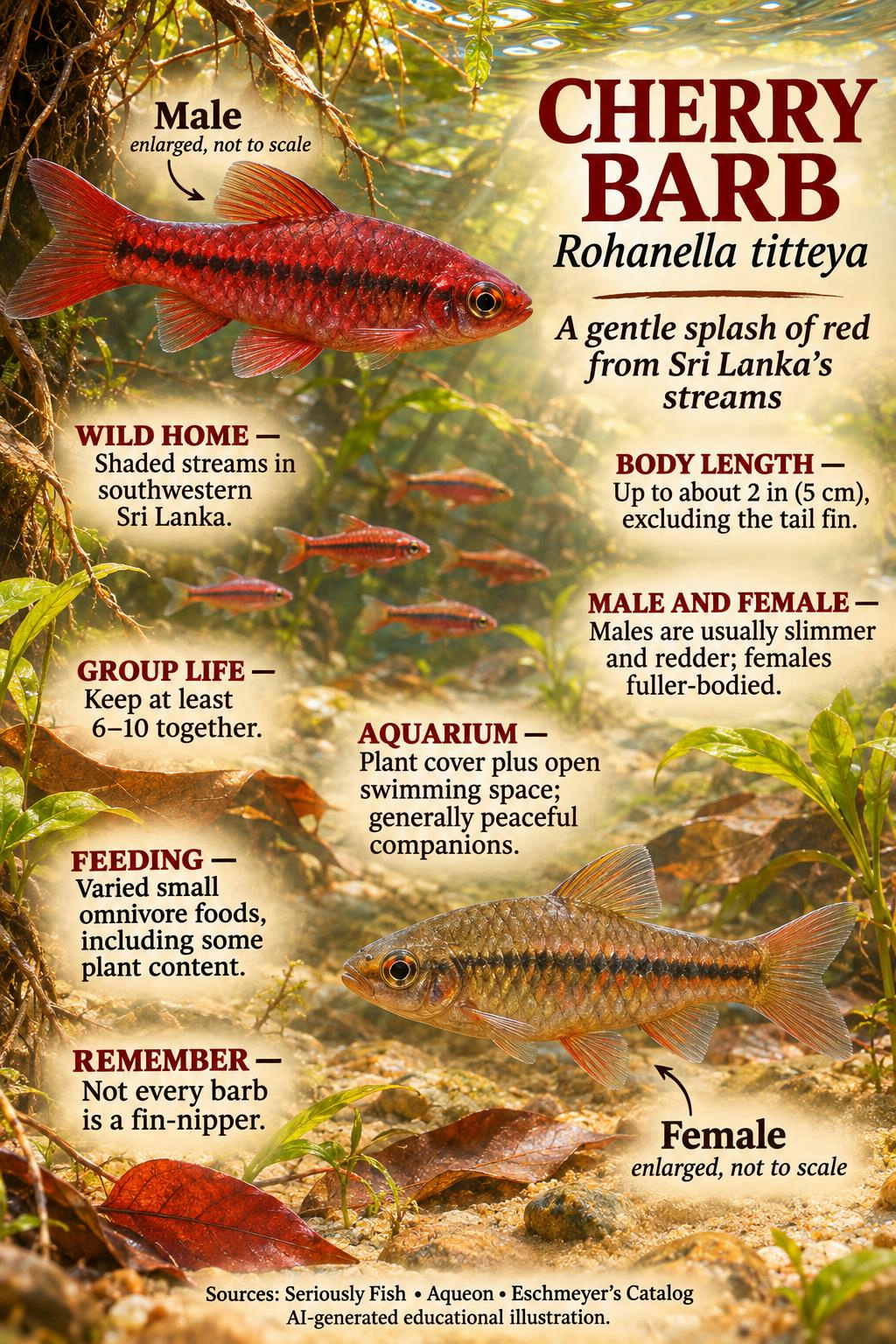
At a glance
- Adult size
- Up to about 2 inches (5 cm) standard length, excluding the tail fin
- Aquarium space
- At least a 24 × 12 inch (60 × 30 cm) base.
- Feeding
- Small omnivore foods with varied supplements.
- Compatibility
- At least 6–10; generally peaceful community fish.
Starting guidance, not a universal minimum. See the care details and sources below.
Adult size
Up to about 2 inches (5 cm) standard length, excluding the tail fin
Aquarium space
At least a 24 × 12 inch (60 × 30 cm) base, following Seriously Fish; provide swimming space for a group, not just a single fish.
Water conditions
68–81°F (20–27°C), pH 6.0–8.0 and 2–20 dGH are the reported ranges for aquarium stock. Wild stock may prefer softer, slightly acidic water. Keep conditions stable rather than chasing the extremes.
Natural home
Native to southwestern Sri Lanka’s wet-zone streams, particularly the Kelani and Nilwala drainage region. Shaded water, leaf litter and overhanging vegetation shape its habitat.
Food and feeding
Offer quality small omnivore flakes or granules, including some plant content, plus varied small frozen or live foods. It is a forager, not a replacement for tank cleaning.
Tankmates and behavior
Keep a group of at least 6–10. Generally peaceful with compatible small community fish; do not transfer the reputation of tiger barbs to every barb species.
Setting up the habitat
Provide plant cover, subdued areas and open swimming lanes. A covered, well-maintained aquarium lets a group settle and show natural behavior.
A closer look
Males are generally slimmer and more intensely colored; females tend to be fuller-bodied and less red. Breeding condition and ornamental strains affect appearance.
Read the infographic as text
- WILD HOME — Shaded streams in southwestern Sri Lanka.
- BODY LENGTH — Up to about 2 in (5 cm), excluding the tail fin.
- GROUP LIFE — Keep at least 6–10 together.
- MALE AND FEMALE — Males are usually slimmer and redder; females fuller-bodied.
- FEEDING — Varied small omnivore foods, including some plant content.
- AQUARIUM — Plant cover plus open swimming space; generally peaceful companions.
- REMEMBER — Not every barb is a fin-nipper.
How to use these figures
Published care ranges and suggested tank sizes are starting points, not guarantees. Tank footprint, group size, filtration, feeding, companions and the individual fish all matter. Standard length excludes the tail fin. Do not abruptly change established water conditions to match a number on a page.
Use a cycled aquarium, monitor water quality and quarantine new arrivals using a suitable species-specific plan. Persistent appetite loss, rapid breathing or weight loss warrants investigation.
Common questions
Are cherry barbs aggressive like tiger barbs?
Keep a group of at least 6–10. Generally peaceful with compatible small community fish; do not transfer the reputation of tiger barbs to every barb species.
How can male and female cherry barbs differ?
Males are generally slimmer and more intensely colored; females tend to be fuller-bodied and less red. Breeding condition and ornamental strains affect appearance.
Sources & review
Checked November 12, 2026. Retailer care guidance is not a universal biological minimum.