
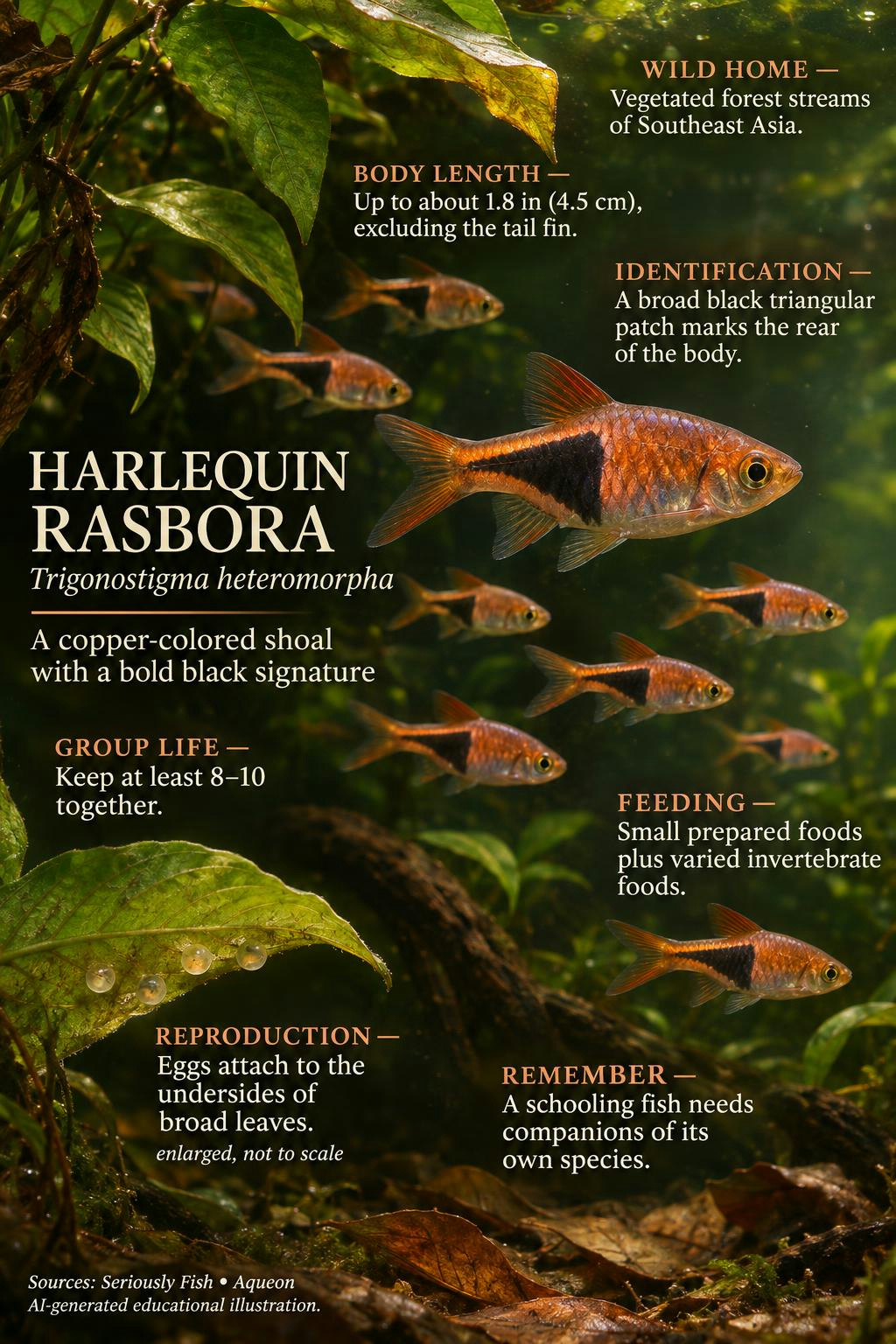
At a glance
- Adult size
- Up to about 1.8 inches (4.5 cm) standard length, excluding the tail fin
- Aquarium space
- At least a 24 × 12 inch (60 × 30 cm) base.
- Feeding
- Small complete foods with varied invertebrate foods.
- Compatibility
- At least 8–10; peaceful, similarly sized companions.
Starting guidance, not a universal minimum. See the care details and sources below.
Adult size
Up to about 1.8 inches (4.5 cm) standard length, excluding the tail fin
Aquarium space
At least a 24 × 12 inch (60 × 30 cm) base, following Seriously Fish, with swimming space for at least 8–10 fish and extra room for companions.
Water conditions
70–82°F (21–28°C), pH 5.0–7.5 and 1–12 dGH are the species-profile ranges. Generic rasbora sheets use different ranges for commercially raised fish; match the stock’s history and avoid abrupt changes.
Natural home
Southeast Asian forest streams, including Peninsular Malaysia and southern Thailand, with vegetation, leaf litter and often softly stained water.
Food and feeding
Offer small complete flakes or granules and varied live or frozen invertebrate foods. Match particle size to the mouth rather than letting large pieces sink uneaten.
Tankmates and behavior
Keep at least 8–10. Generally peaceful with similarly sized fish that share its water requirements; avoid large predators.
Setting up the habitat
Use plants, sheltered edges and some subdued light, leaving an open area for the shoal. Fit a lid and maintain gentle circulation.
A closer look
Its broad dark triangular rear-body patch distinguishes it from the narrower lambchop marking of similar relatives. Unlike many small cyprinids, it attaches eggs to the undersides of broad leaves.
Read the infographic as text
- WILD HOME — Vegetated forest streams of Southeast Asia.
- BODY LENGTH — Up to about 1.8 in (4.5 cm), excluding the tail fin.
- IDENTIFICATION — A broad black triangular patch marks the rear of the body.
- GROUP LIFE — Keep at least 8–10 together.
- FEEDING — Small prepared foods plus varied invertebrate foods.
- REPRODUCTION — Eggs attach to the undersides of broad leaves.
- REMEMBER — A schooling fish needs companions of its own species.
How to use these figures
Published care ranges and suggested tank sizes are starting points, not guarantees. Tank footprint, group size, filtration, feeding, companions and the individual fish all matter. Standard length excludes the tail fin. Do not abruptly change established water conditions to match a number on a page.
Use a cycled aquarium, monitor water quality and quarantine new arrivals using a suitable species-specific plan. Persistent appetite loss, rapid breathing or weight loss warrants investigation.
Common questions
How many harlequin rasboras should I keep?
Keep at least 8–10. Generally peaceful with similarly sized fish that share its water requirements; avoid large predators.
How can I recognize a harlequin rasbora?
Its broad dark triangular rear-body patch distinguishes it from the narrower lambchop marking of similar relatives. Unlike many small cyprinids, it attaches eggs to the undersides of broad leaves.
Sources & review
Checked November 12, 2026. Retailer care guidance is not a universal biological minimum.