
At a glance
- Adult size
- About 2.4–3.5 inches (6–9 cm), following Aquarium of the Pacific
- Aquarium space
- OATA starting point: 32 US gallons (120 L); food supply matters more than volume alone.
- Feeding
- Specialist: sustained tiny live prey; verify any prepared-food acceptance.
- Compatibility
- Avoid food competitors and two males together.
Starting guidance, not a universal minimum. See the care details and sources below.
Adult size
About 2.4–3.5 inches (6–9 cm), following Aquarium of the Pacific
Aquarium space
OATA gives 120 litres (32 US gallons) with abundant live rock or rubble as a starting recommendation for an individual dragonet. Volume alone is not a feeding plan: a larger established system may still lack enough suitable prey.
Water conditions
OATA’s dragonet guide gives 75–79°F (24–26°C) and pH 7.9–8.3. Its fish-care specific-gravity range is 1.020–1.025; a mixed reef may need different parameters for its invertebrates. Confirm a stable salinity plan for the whole aquarium rather than treating the endpoints as targets.
Natural home
Western Pacific reef-associated lagoons and shallow reefs, usually close to sand, rubble and coral cover.
Food and feeding
A slow, persistent hunter of tiny crustaceans and other small invertebrates. Establish a sustained live-food supply and verify that any frozen or prepared foods are actually swallowed. Captive-bred fish may accept alternatives, but the label alone does not prove that this individual does.
Tankmates and behavior
Avoid aggressive food competitors. Males can fight, so do not keep two males together. Observe body condition as well as whether the fish is pecking at the rock.
Setting up the habitat
Provide mature rockwork, sheltered foraging surfaces and a realistic plan to replenish appropriate live prey. Ask what the seller is feeding and watch a feeding before purchase.
A closer look
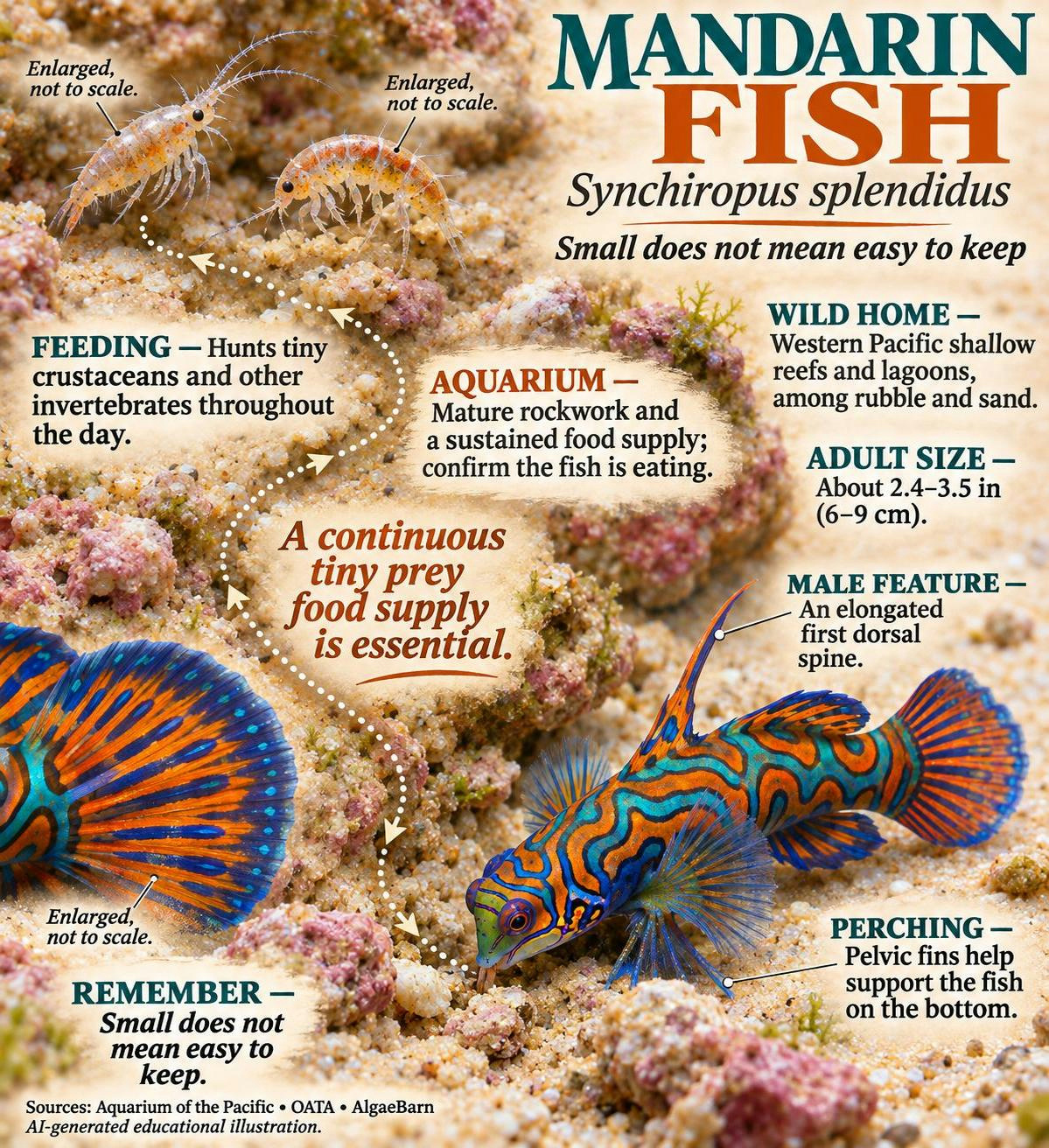
Males have an elongated first dorsal spine. Pelvic fins help support bottom perching. Despite the common name ‘mandarin goby’, it is a dragonet, not a goby.
Read the infographic as text
- WILD HOME — Western Pacific shallow reefs and lagoons, among rubble and sand.
- ADULT SIZE — About 2.4–3.5 in (6–9 cm).
- FEEDING — Hunts tiny crustaceans and other invertebrates throughout the day.
- MALE FEATURE — An elongated first dorsal spine.
- PERCHING — Pelvic fins help support the fish on the bottom.
- AQUARIUM — Mature rockwork and a sustained food supply; confirm the fish is eating.
- REMEMBER — Small does not mean easy to keep.
How to use these figures
Published care ranges and suggested tank sizes are starting points, not guarantees. Tank footprint, group size, filtration, feeding, companions and the individual fish all matter. Standard length excludes the tail fin. Do not abruptly change established water conditions to match a number on a page.
Use a cycled aquarium, monitor water quality and quarantine new arrivals using a suitable species-specific plan. Persistent appetite loss, rapid breathing or weight loss warrants investigation.
Common questions
Is a mandarinfish suitable for a new tank?
Provide mature rockwork, sheltered foraging surfaces and a realistic plan to replenish appropriate live prey. Ask what the seller is feeding and watch a feeding before purchase.
Does captive-bred mean it will eat pellets?
A slow, persistent hunter of tiny crustaceans and other small invertebrates. Establish a sustained live-food supply and verify that any frozen or prepared foods are actually swallowed. Captive-bred fish may accept alternatives, but the label alone does not prove that this individual does.
Sources & review
Checked November 12, 2026. Retailer care guidance is not a universal biological minimum.
- Mandarinfish | Online Learning Center
- How to look after dragonets / mandarin fish - OATA
- Keeping and Feeding the Mandarin Fishes — reviewed care reference