
At a glance
- Adult size
- 18 in (45.72 cm)
- Space
- 250+ US gallons (946 L)
- Social needs
- May nip corals and clam mantles; it can become aggressive toward tankmates.
Starting guidance, not a universal minimum. See the care details and sources below.
Adult size
Reported size: up to 18 in (45.72 cm), long.
Aquarium space
LiveAquaria gives 250+ US gallons (946 L). Provide a long, broad aquarium with ample room to turn and swim, not just a tall tank of the same volume. The source does not give a complete adult footprint; volume alone does not establish a suitable shape.
Water conditions
72–78°F (22–26°C); pH 8.1 - 8.4; dKH 8 - 12; SG 1.020-1.025. Keep conditions stable.
Natural home
A marine aquarium with swimming space and secure rockwork shelters.
Food and feeding
Offer marine algae, Spirulina, varied marine meaty foods and quality angelfish preparations. Feed at least three times daily.
Tankmates and behavior
May nip corals and clam mantles; it can become aggressive toward tankmates.
Setting up the habitat
Provide live rock for grazing, substantial swimming space and hiding places.
A closer look
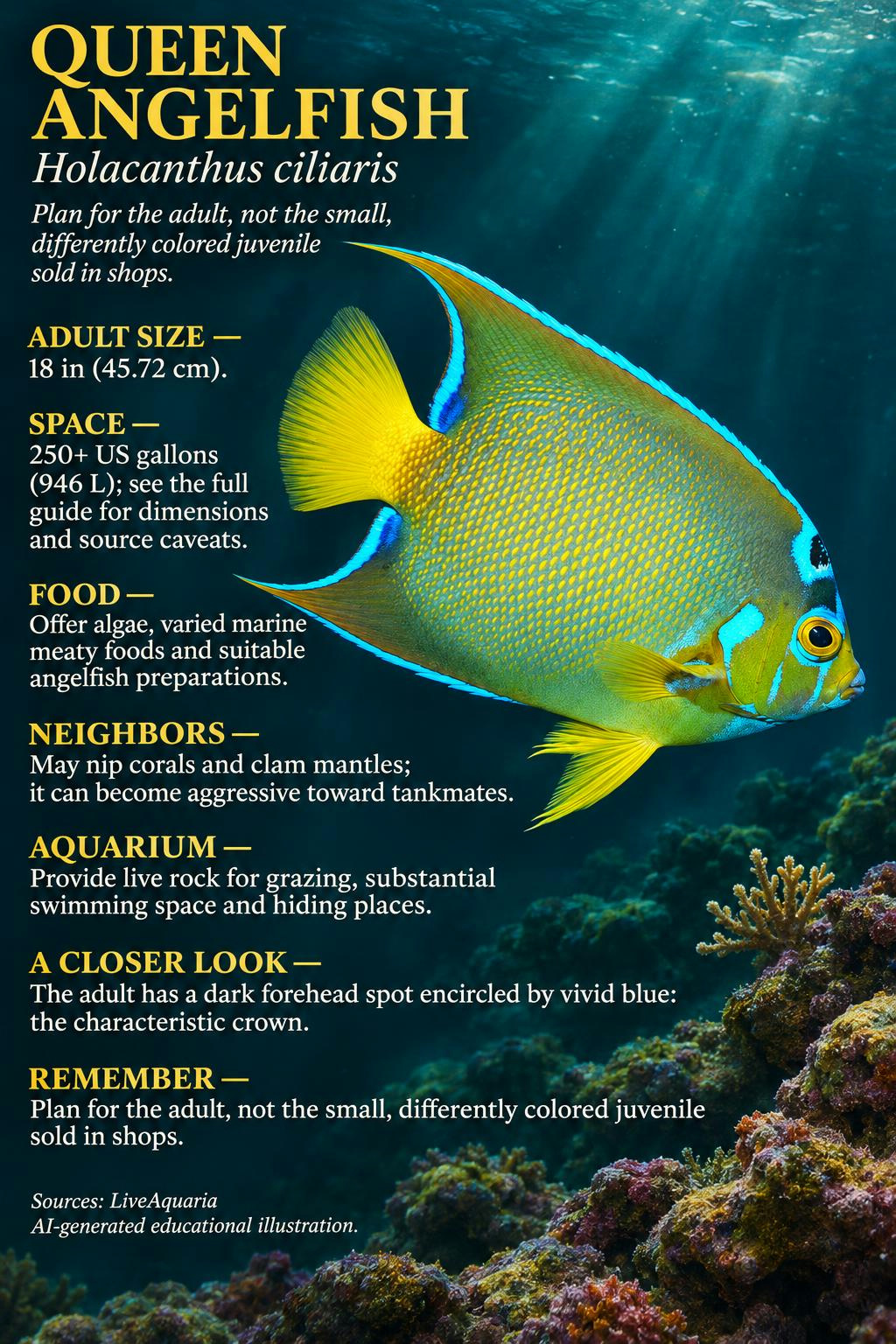
The adult has a dark forehead spot encircled by vivid blue: the characteristic crown.
Read the infographic as text
- ADULT SIZE — 18 in (45.72 cm).
- SPACE — 250+ US gallons (946 L); see the full guide for dimensions and source caveats.
- FOOD — Offer algae, varied marine meaty foods and suitable angelfish preparations.
- NEIGHBORS — May nip corals and clam mantles; it can become aggressive toward tankmates.
- AQUARIUM — Provide live rock for grazing, substantial swimming space and hiding places.
- A CLOSER LOOK — The adult has a dark forehead spot encircled by vivid blue: the characteristic crown.
- REMEMBER — Plan for the adult, not the small, differently colored juvenile sold in shops.
How to use these figures
Published care ranges and suggested tank sizes are starting points, not guarantees. Tank footprint, group size, filtration, feeding, companions and the individual fish all matter. Standard length excludes the tail fin. Do not abruptly change established water conditions to match a number on a page.
Use a cycled aquarium, monitor water quality and quarantine new arrivals using a suitable species-specific plan. Persistent appetite loss, rapid breathing or weight loss warrants investigation.
Common questions
What should I know before choosing this fish?
Plan for the adult, not the small, differently colored juvenile sold in shops. May nip corals and clam mantles; it can become aggressive toward tankmates.
What should I feed it?
Offer marine algae, Spirulina, varied marine meaty foods and quality angelfish preparations. Feed at least three times daily.
How much space does an adult need?
LiveAquaria gives 250+ US gallons (946 L). Provide a long, broad aquarium with ample room to turn and swim, not just a tall tank of the same volume. The source does not give a complete adult footprint; volume alone does not establish a suitable shape.
Sources & review
Checked November 12, 2026. Retailer care guidance is not a universal biological minimum.
- LiveAquaria — Queen angelfish — reviewed care reference