
At a glance
- Adult size
- About 17 in body length
- Space
- 120 cm (47 in) long tank or larger; see details
- Social needs
- Territorial with its own kind and similar-sized catfish, but otherwise peaceful with smaller fish.
Starting guidance, not a universal minimum. See the care details and sources below.
Adult size
FishBase and PlanetCatfish both record a maximum standard length of 43 cm (16.9 inches), excluding the tail. Adult size and aquarium recommendations are not the same thing.
Aquarium space
FishBase gives a minimum aquarium size of 120 cm (about 47 inches) long; PlanetCatfish gives no minimum, and neither gives a volume. A fish that reaches about 17 inches will need a long, roomy tank.
Water conditions
PlanetCatfish lists 71.6–86°F (22–30°C) and pH 6.5–7.5; FishBase lists 22–26°C (72–79°F), pH 6.5–7.5 and dH 2–15. These are maintenance ranges, not targets to swing between; avoid abrupt changes.
Natural home
Tributaries of the Orinoco and the southern middle and lower Amazon in South America; juveniles live on submerged wood.
Food and feeding
A classic pleco diet of greens: most vegetables, with tinned peas a favorite, some prepared foods, and it also appears to eat bogwood.
Tankmates and behavior
Territorial with its own kind and similar-sized catfish, but otherwise peaceful with smaller fish.
Setting up the habitat
Bogwood is essential, for diet and shelter; secure the rocks, as larger fish rearrange the tank.
A closer look
Spoon-shaped teeth mark its genus, and its eye color varies from bright orange to dull red.
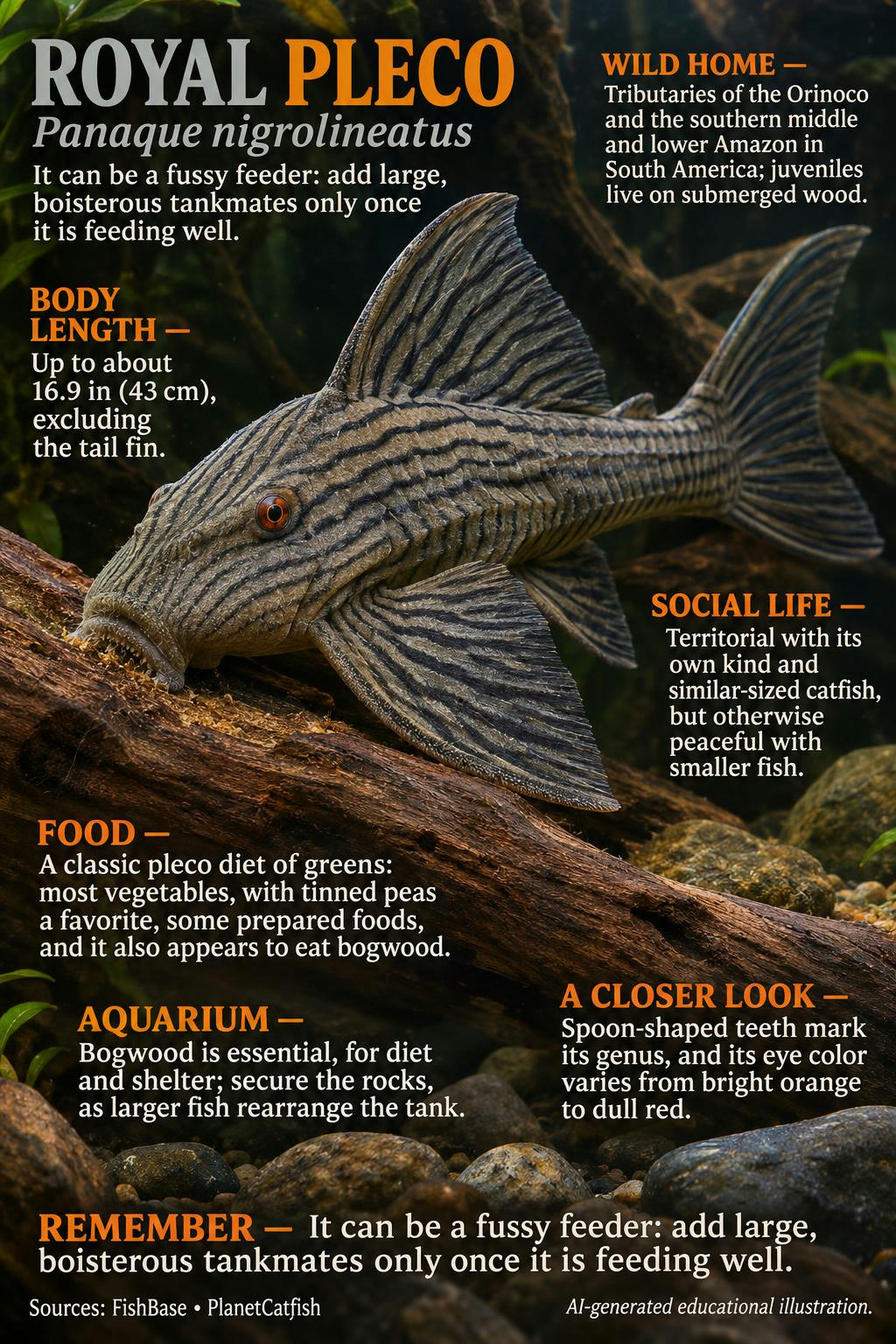
Read the infographic as text
- WILD HOME — Tributaries of the Orinoco and the southern middle and lower Amazon in South America; juveniles live on submerged wood.
- BODY LENGTH — Up to about 16.9 in (43 cm), excluding the tail fin.
- FOOD — A classic pleco diet of greens: most vegetables, with tinned peas a favorite, some prepared foods, and it also appears to eat bogwood.
- SOCIAL LIFE — Territorial with its own kind and similar-sized catfish, but otherwise peaceful with smaller fish.
- AQUARIUM — Bogwood is essential, for diet and shelter; secure the rocks, as larger fish rearrange the tank.
- A CLOSER LOOK — Spoon-shaped teeth mark its genus, and its eye color varies from bright orange to dull red.
- REMEMBER — It can be a fussy feeder: add large, boisterous tankmates only once it is feeding well.
How to use these figures
Published care ranges and suggested tank sizes are starting points, not guarantees. Tank footprint, group size, filtration, feeding, companions and the individual fish all matter. Standard length excludes the tail fin. Do not abruptly change established water conditions to match a number on a page.
Use a cycled aquarium, monitor water quality and quarantine new arrivals using a suitable species-specific plan. Persistent appetite loss, rapid breathing or weight loss warrants investigation.
Common questions
What should I know before choosing this fish?
It can be a fussy feeder: add large, boisterous tankmates only once it is feeding well. Territorial with its own kind and similar-sized catfish, but otherwise peaceful with smaller fish.
What should I feed it?
A classic pleco diet of greens: most vegetables, with tinned peas a favorite, some prepared foods, and it also appears to eat bogwood.
Sources & review
Checked November 12, 2026. Retailer care guidance is not a universal biological minimum.