
At a glance
- Adult size
- Up to about 3.4 inches (8.6 cm), as reported by Top Shelf Aquatics
- Aquarium space
- 30 US gallons or more, with sheltered retreats.
- Feeding
- Confirm captive-bred fish accept the offered food.
- Compatibility
- Single fish or a confirmed compatible pair.
Starting guidance, not a universal minimum. See the care details and sources below.
Adult size
Up to about 3.4 inches (8.6 cm), as reported by Top Shelf Aquatics
Aquarium space
30 US gallons or more for a single fish or confirmed compatible pair; rock retreats and adequate feeding space are important.
Water conditions
LiveAquaria lists 72–78°F (22–26°C), pH 8.1–8.4 and specific gravity 1.020–1.025. These are retailer fish-care ranges, not a universal salinity prescription for every coral or invertebrate. Match the whole system and keep conditions stable.
Natural home
Naturally restricted to the Banggai Archipelago of Indonesia, with introduced populations elsewhere. It lives in shallow calm coastal habitats with reef and seagrass cover.
Food and feeding
A small-prey carnivore. Feed varied, appropriately sized mysis and other marine foods. Captive-bred fish may accept pellets, but confirm the individual’s feeding response. Make sure dominant fish do not take every portion.
Tankmates and behavior
A single specimen or confirmed compatible pair is safer than assuming a juvenile group will remain peaceful. Pairs can exclude other fish of their own species as they mature.
Setting up the habitat
Provide sheltered hovering areas near stable rockwork and open feeding space. A live sea urchin or anemone is not required for a home aquarium.
A closer look
Males brood eggs and young in their mouths and release developed juveniles. NOAA lists the species as threatened under the US Endangered Species Act; collection and habitat damage are major pressures.
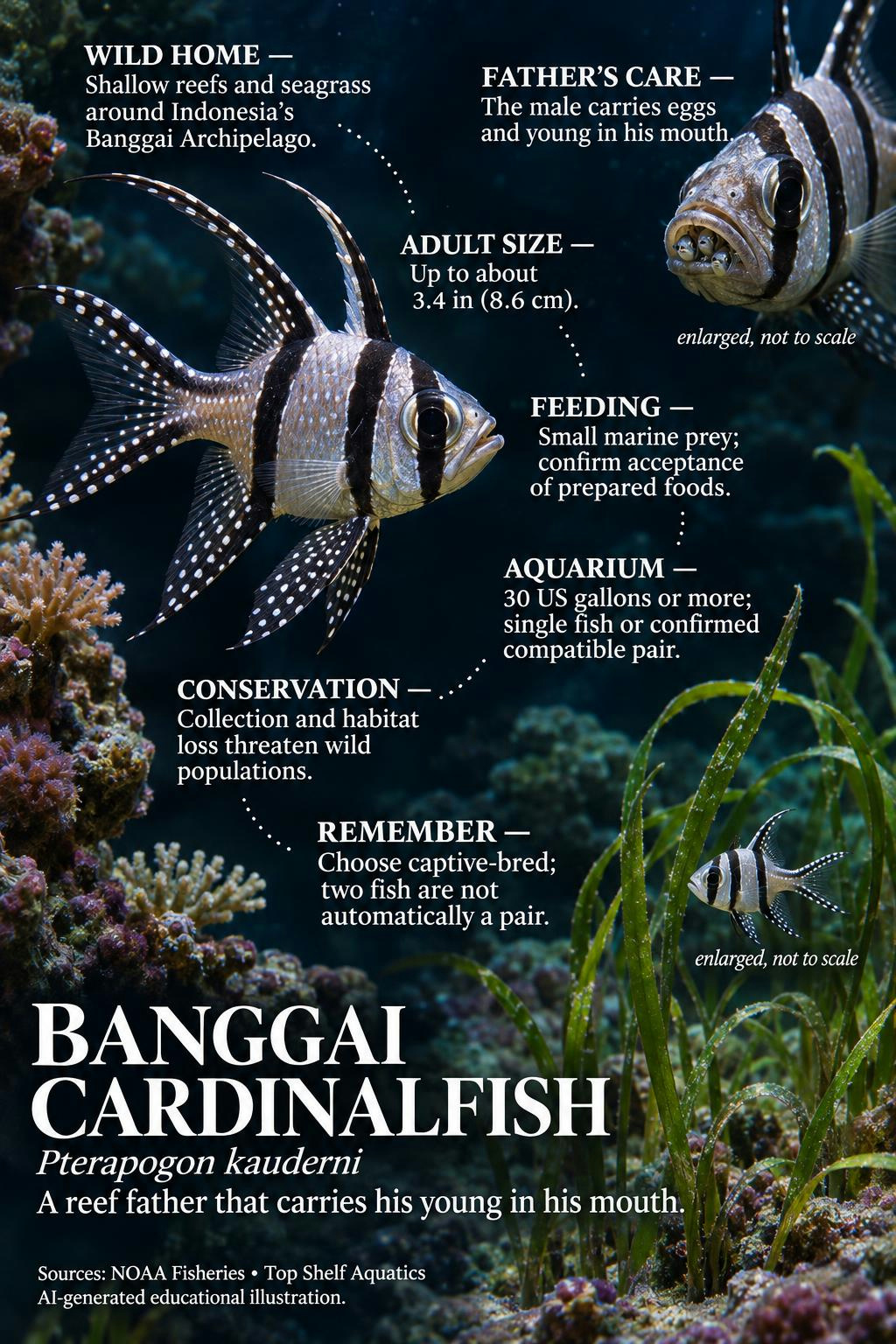
Read the infographic as text
- WILD HOME — Shallow reefs and seagrass around Indonesia’s Banggai Archipelago.
- ADULT SIZE — Up to about 3.4 in (8.6 cm).
- FEEDING — Small marine prey; confirm acceptance of prepared foods.
- FATHER’S CARE — The male carries eggs and young in his mouth.
- AQUARIUM — 30 US gallons or more; single fish or confirmed compatible pair.
- CONSERVATION — Collection and habitat loss threaten wild populations.
- REMEMBER — Choose captive-bred; two fish are not automatically a pair.
How to use these figures
Published care ranges and suggested tank sizes are starting points, not guarantees. Tank footprint, group size, filtration, feeding, companions and the individual fish all matter. Standard length excludes the tail fin. Do not abruptly change established water conditions to match a number on a page.
Use a cycled aquarium, monitor water quality and quarantine new arrivals using a suitable species-specific plan. Persistent appetite loss, rapid breathing or weight loss warrants investigation.
Common questions
Why choose captive-bred Banggai cardinalfish?
Males brood eggs and young in their mouths and release developed juveniles. NOAA lists the species as threatened under the US Endangered Species Act; collection and habitat damage are major pressures.
Will two Banggai cardinalfish always form a pair?
A single specimen or confirmed compatible pair is safer than assuming a juvenile group will remain peaceful. Pairs can exclude other fish of their own species as they mature.
Sources & review
Checked November 12, 2026. Retailer care guidance is not a universal biological minimum.
- Banggai Cardinalfish | NOAA Fisheries
- Captive-Bred Banggai Cardinalfish Care Guide — reviewed care reference
- LiveAquaria — Kaudern’s Cardinal (water parameters) — reviewed care reference