
At a glance
- Adult size
- Up to about 8 in
- Space
- 50–55 US gallons or more; see details
- Social needs
- Generally peaceful with fish of similar size, but it can be timid or bullied by other cichlids.
Starting guidance, not a universal minimum. See the care details and sources below.
Adult size
LiveAquaria lists a maximum of 8 inches (20 cm). It is a man-made hybrid, so there is no wild record to compare.
Aquarium space
LiveAquaria’s care text calls for an aquarium of at least 55 US gallons (208 litres); its quick-facts panel lists 50. Treat either as a starting recommendation.
Water conditions
LiveAquaria lists 72–80°F (22–27°C) and pH 6.5–8.0. These are maintenance ranges, not targets to swing between; avoid abrupt changes.
Natural home
None: it is the result of crossbreeding different Central American cichlids.
Food and feeding
Omnivorous: most prepared and frozen foods, including flake food and cichlid pellets.
Tankmates and behavior
Generally peaceful with fish of similar size, but it can be timid or bullied by other cichlids.
Setting up the habitat
A sandy bottom, rocks with plenty of hiding places, and live plants kept in pots.
A closer look
Juveniles are dark and turn orange to red as they mature; it is normally infertile.
Read the infographic as text
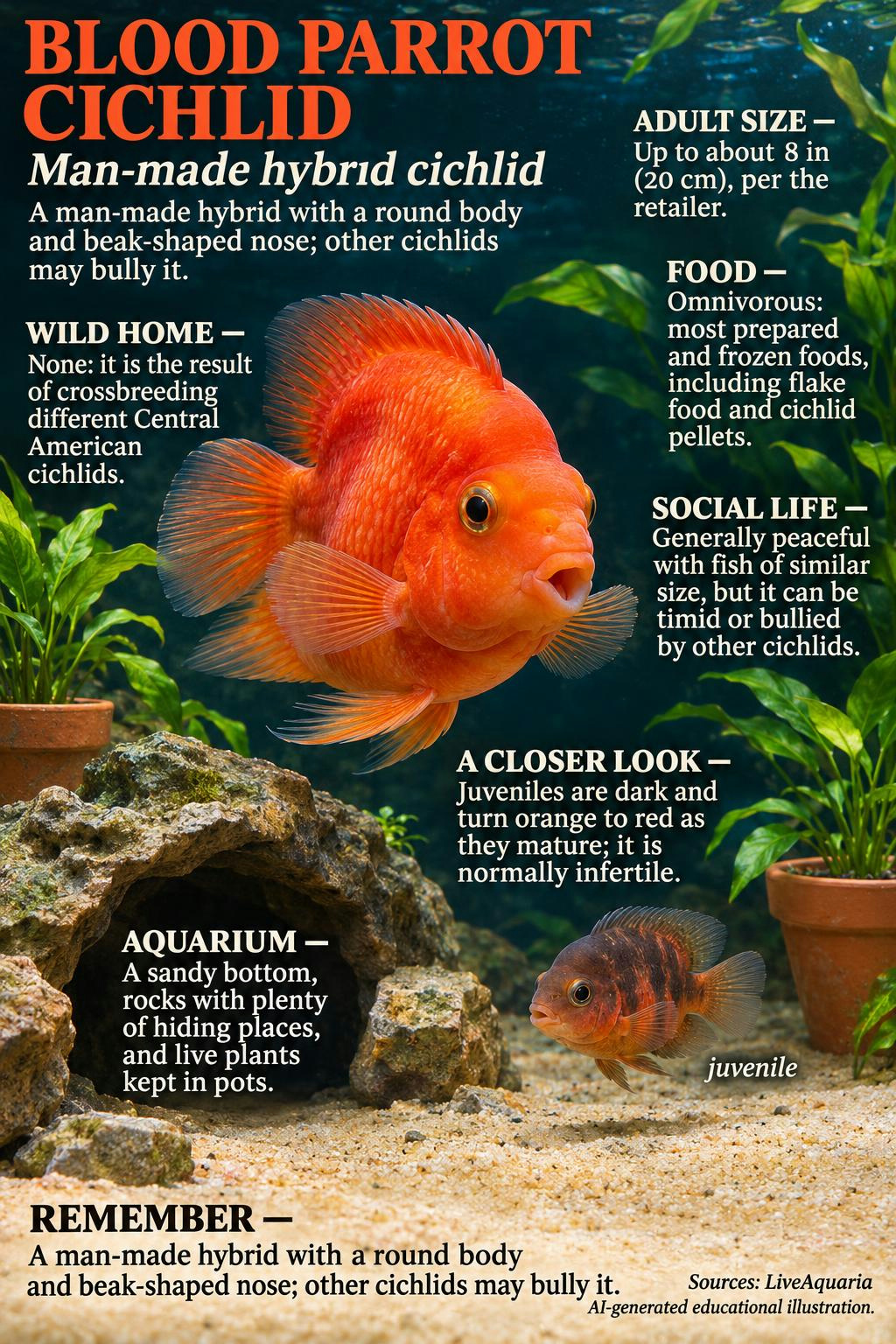
- WILD HOME — None: it is the result of crossbreeding different Central American cichlids.
- ADULT SIZE — Up to about 8 in (20 cm), per the retailer.
- FOOD — Omnivorous: most prepared and frozen foods, including flake food and cichlid pellets.
- SOCIAL LIFE — Generally peaceful with fish of similar size, but it can be timid or bullied by other cichlids.
- AQUARIUM — A sandy bottom, rocks with plenty of hiding places, and live plants kept in pots.
- A CLOSER LOOK — Juveniles are dark and turn orange to red as they mature; it is normally infertile.
- REMEMBER — A man-made hybrid with a round body and beak-shaped nose; other cichlids may bully it.
How to use these figures
Published care ranges and suggested tank sizes are starting points, not guarantees. Tank footprint, group size, filtration, feeding, companions and the individual fish all matter. Standard length excludes the tail fin. Do not abruptly change established water conditions to match a number on a page.
Use a cycled aquarium, monitor water quality and quarantine new arrivals using a suitable species-specific plan. Persistent appetite loss, rapid breathing or weight loss warrants investigation.
Common questions
What should I know before choosing this fish?
A man-made hybrid with a round body and beak-shaped nose; other cichlids may bully it. Generally peaceful with fish of similar size, but it can be timid or bullied by other cichlids.
What should I feed it?
Omnivorous: most prepared and frozen foods, including flake food and cichlid pellets.
Sources & review
Checked November 12, 2026. Retailer care guidance is not a universal biological minimum.
- LiveAquaria — Red Parrot care profile — reviewed care reference