
At a glance
- Adult size
- Recorded maximum 5.5 in; see length definition
- Space
- Adult swimming and feeding space; see details
- Social needs
- Usually best kept singly; may challenge similar-looking fish and can nip some corals or clam mantles.
Starting guidance, not a universal minimum. See the care details and sources below.
Adult size
FishBase reports a maximum recorded length of 14 cm (5.5 inches), including the tail. A recorded maximum is not a promise of typical aquarium size.
Aquarium space
An established aquarium with substantial grazing surfaces is essential. The reviewed care text does not supply a numerical minimum; arrange space and feeding around the adult rather than inventing a gallon threshold.
Water conditions
Maintain stable, well-oxygenated marine water. Match temperature and salinity to the whole aquarium and the stock’s acclimation needs; the reviewed care text does not establish a species-specific numerical target. Check salinity with a suitable calibrated instrument and avoid abrupt changes.
Natural home
Shallow Indo-Pacific reefs and algae-rich rubble areas.
Food and feeding
Natural grazing plus accepted algae-based prepared foods; watch body condition.
Tankmates and behavior
Usually best kept singly; may challenge similar-looking fish and can nip some corals or clam mantles.
Setting up the habitat
Mature rockwork with grazing surfaces, crevices and perches.
A closer look
Its mottled body, large eyes and perching habits help it blend with rock.
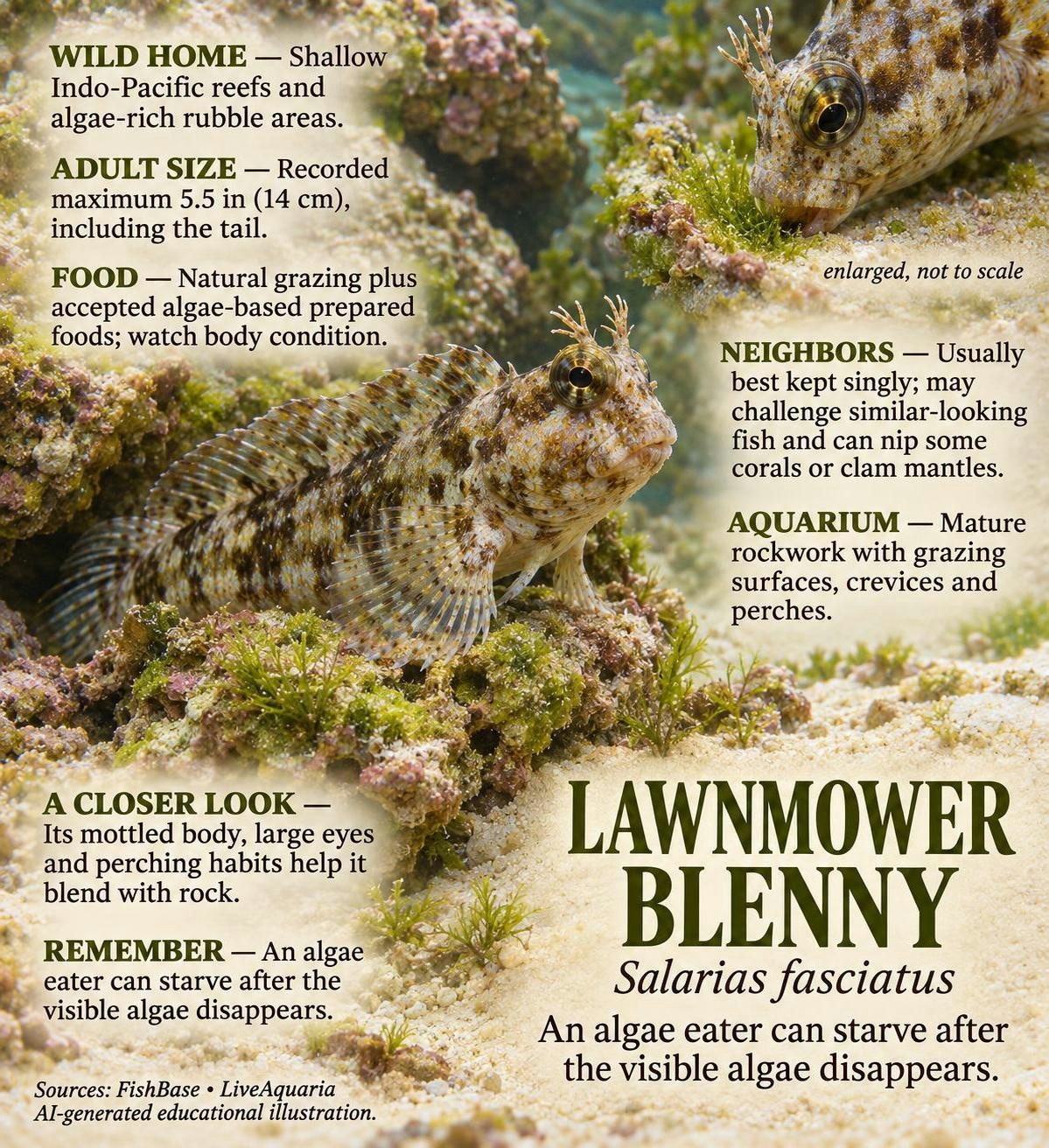
Read the infographic as text
- WILD HOME — Shallow Indo-Pacific reefs and algae-rich rubble areas.
- ADULT SIZE — Recorded maximum 5.5 in (14 cm), including the tail.
- FOOD — Natural grazing plus accepted algae-based prepared foods; watch body condition.
- NEIGHBORS — Usually best kept singly; may challenge similar-looking fish and can nip some corals or clam mantles.
- AQUARIUM — Mature rockwork with grazing surfaces, crevices and perches.
- A CLOSER LOOK — Its mottled body, large eyes and perching habits help it blend with rock.
- REMEMBER — An algae eater can starve after the visible algae disappears.
How to use these figures
Published care ranges and suggested tank sizes are starting points, not guarantees. Tank footprint, group size, filtration, feeding, companions and the individual fish all matter. Standard length excludes the tail fin. Do not abruptly change established water conditions to match a number on a page.
Use a cycled aquarium, monitor water quality and quarantine new arrivals using a suitable species-specific plan. Persistent appetite loss, rapid breathing or weight loss warrants investigation.
Common questions
What is the main consideration before buying?
An algae eater can starve after the visible algae disappears. Usually best kept singly; may challenge similar-looking fish and can nip some corals or clam mantles.
What should this fish eat?
Natural grazing plus accepted algae-based prepared foods; watch body condition.
Sources & review
Checked November 12, 2026. Retailer care guidance is not a universal biological minimum.
- FishBase — Salarias fasciatus species account
- LiveAquaria — Lawnmower blenny care profile — reviewed care reference