
At a glance
- Adult size
- Recorded maximum 18.1 in; see length definition
- Space
- 180+ US gallons; see details
- Social needs
- Aggressive toward other tangs but peaceful with other fish.
Starting guidance, not a universal minimum. See the care details and sources below.
Adult size
FishBase reports a maximum recorded length of 46 cm (18.1 inches), excluding the tail. A recorded maximum is not a promise of typical aquarium size. LiveAquaria lists a maximum of 18 inches.
Aquarium space
LiveAquaria recommends 180 US gallons (681 litres) or more. Treat that as a starting recommendation: footprint, adult size, feeding and companions can require more space.
Water conditions
Maintain stable, well-oxygenated marine water. Match temperature and salinity to the whole aquarium and the stock’s acclimation needs; the reviewed care text does not establish a species-specific numerical target. Check salinity with a suitable calibrated instrument and avoid abrupt changes.
Natural home
Coral, rock and rubble areas of lagoon and seaward reefs across the Pacific.
Food and feeding
Plenty of marine seaweed and algae; wild fish eat mainly leafy brown algae.
Tankmates and behavior
Aggressive toward other tangs but peaceful with other fish.
Setting up the habitat
Plenty of swimming room, places to hide and a tight-fitting lid.
A closer look
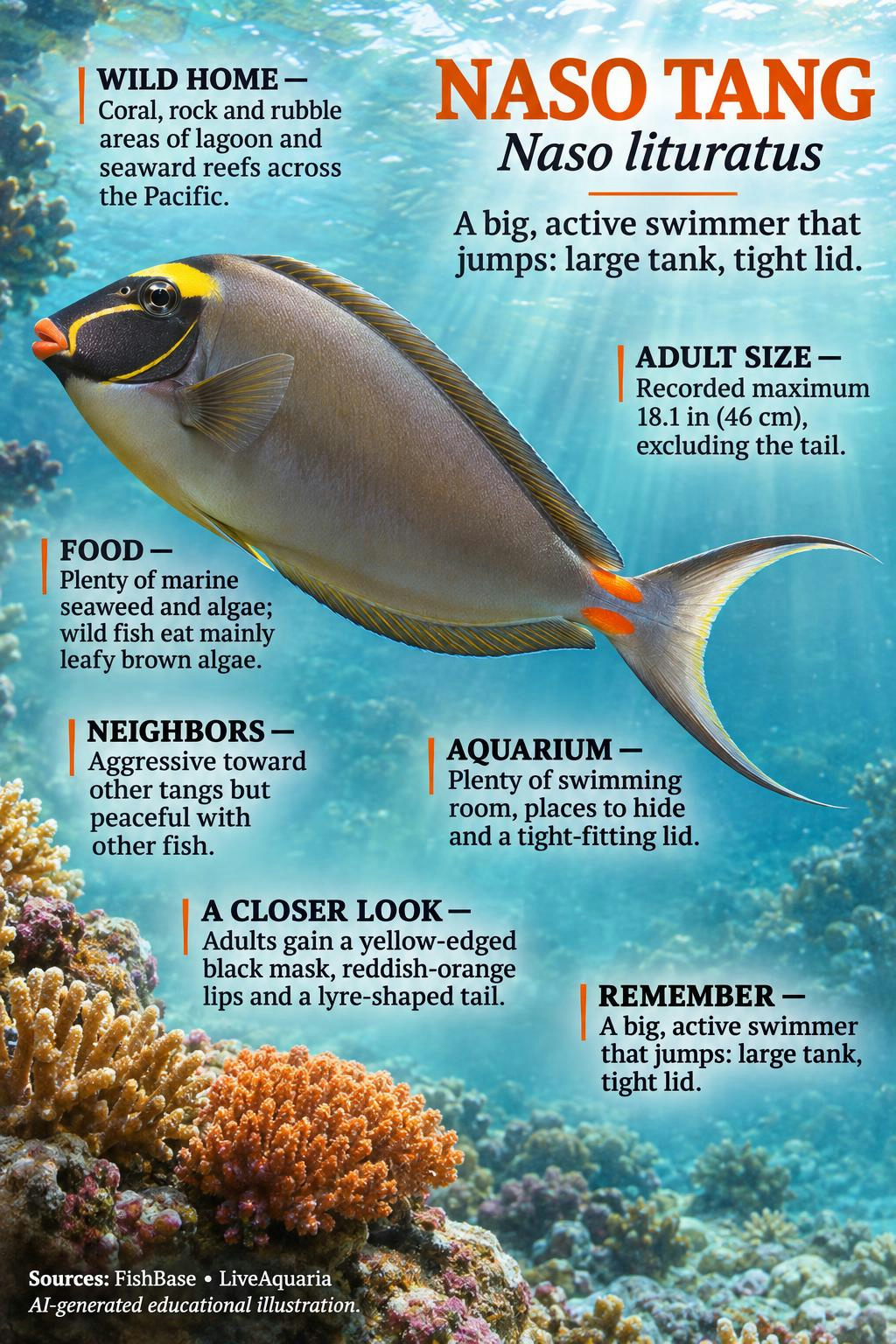
Adults gain a yellow-edged black mask, reddish-orange lips and a lyre-shaped tail.
Read the infographic as text
- WILD HOME — Coral, rock and rubble areas of lagoon and seaward reefs across the Pacific.
- ADULT SIZE — Recorded maximum 18.1 in (46 cm), excluding the tail.
- FOOD — Plenty of marine seaweed and algae; wild fish eat mainly leafy brown algae.
- NEIGHBORS — Aggressive toward other tangs but peaceful with other fish.
- AQUARIUM — Plenty of swimming room, places to hide and a tight-fitting lid.
- A CLOSER LOOK — Adults gain a yellow-edged black mask, reddish-orange lips and a lyre-shaped tail.
- REMEMBER — A big, active swimmer that jumps: large tank, tight lid.
How to use these figures
Published care ranges and suggested tank sizes are starting points, not guarantees. Tank footprint, group size, filtration, feeding, companions and the individual fish all matter. Standard length excludes the tail fin. Do not abruptly change established water conditions to match a number on a page.
Use a cycled aquarium, monitor water quality and quarantine new arrivals using a suitable species-specific plan. Persistent appetite loss, rapid breathing or weight loss warrants investigation.
Common questions
What is the main consideration before buying?
A big, active swimmer that jumps: large tank, tight lid. Aggressive toward other tangs but peaceful with other fish.
What should this fish eat?
Plenty of marine seaweed and algae; wild fish eat mainly leafy brown algae.
Sources & review
Checked November 12, 2026. Retailer care guidance is not a universal biological minimum.
- FishBase — Naso lituratus species account
- LiveAquaria — Naso tang care profile — reviewed care reference