
At a glance
- Adult size
- 70 cm (27.6 in) DW in SF; 111 cm (43.7 in) WD maximum in FishBase
- Space
- 428 US gal (1,620 L), 240 × 90 × 75 cm source plan; not for 111-cm-wide individuals
- Social needs
- This guide covers one ray. Small fish are prey; avoid aggressive companions and suckermouth catfish that may injure the disc. Extra fish or breeding pairs require a separate stocking assessment.
Starting guidance, not a universal minimum. See the care details and sources below.
Adult size
Seriously Fish reports females reaching 27.6 inches (70 cm) across the disc, while FishBase lists a maximum of 43.7 inches (111 cm) disc width. Plan around disc width rather than tail length.
Aquarium space
Seriously Fish gives a single-adult option of 428 US gallons (1,620 L), with a 240 × 90 × 75 cm footprint-and-height specification (about 94 × 35 × 30 inches). This plan concerns its stated adult size around 70 cm disc width, not the 111 cm FishBase maximum: that wider animal cannot fit the 90 cm width. Use a broad, largely unobstructed floor; do not substitute a tall tank of equal volume or treat this as a guarantee for every adult.
Water conditions
Seriously Fish: 68–84°F (20–29°C), preferably toward the upper end; pH 6.0–7.5 and hardness ideally below 5 dGH. Keep conditions stable, the water well oxygenated and nitrogenous waste controlled.
Natural home
Known from Brazil’s Xingu River basin and Rio Fresco, including sandy or muddy river and tributary habitats.
Food and feeding
Offer varied aquatic meaty foods such as prawns, mussels, squid, suitable fish and earthworms, at least twice daily. Newly imported rays may need live worms initially; avoid feeder fish and mammal or poultry meat.
Tankmates and behavior
This guide covers one ray. Small fish are prey; avoid aggressive companions and suckermouth catfish that may injure the disc. Extra fish or breeding pairs require a separate stocking assessment.
Setting up the habitat
Provide a broad sandy floor, strong biological filtration, good oxygenation, regular substantial water changes and a tightly fitting cover. Guard heaters or keep them outside the display to prevent burns.
A closer look
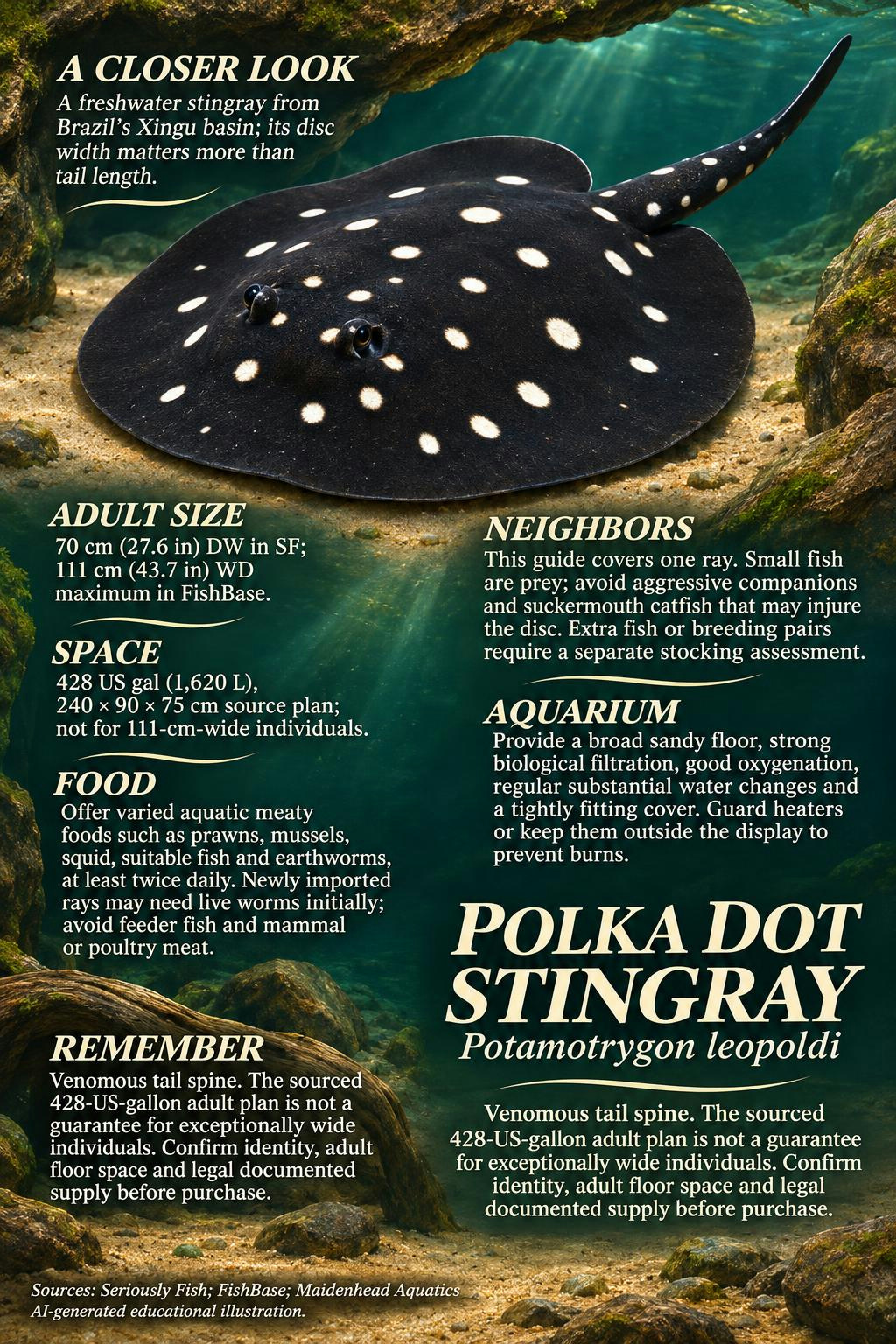
A freshwater stingray from Brazil's Xingu basin; its disc width matters more than tail length.
Read the infographic as text
- ADULT SIZE — 70 cm (27.6 in) DW in SF; 111 cm (43.7 in) WD maximum in FishBase.
- SPACE — 428 US gal (1,620 L), 240 × 90 × 75 cm source plan; not for 111-cm-wide individuals.
- FOOD — Offer varied aquatic meaty foods such as prawns, mussels, squid, suitable fish and earthworms, at least twice daily. Newly imported rays may need live worms initially; avoid feeder fish and mammal or poultry meat.
- NEIGHBORS — This guide covers one ray. Small fish are prey; avoid aggressive companions and suckermouth catfish that may injure the disc. Extra fish or breeding pairs require a separate stocking assessment.
- AQUARIUM — Provide a broad sandy floor, strong biological filtration, good oxygenation, regular substantial water changes and a tightly fitting cover. Guard heaters or keep them outside the display to prevent burns.
- A CLOSER LOOK — A freshwater stingray from Brazil's Xingu basin; its disc width matters more than tail length.
- REMEMBER — Venomous tail spine. The sourced 428-US-gallon adult plan is not a guarantee for exceptionally wide individuals. Confirm identity, adult floor space and legal documented supply before purchase.
How to use these figures
Published care ranges and suggested tank sizes are starting points, not guarantees. Tank footprint, group size, filtration, feeding, companions and the individual fish all matter. Standard length excludes the tail fin. Do not abruptly change established water conditions to match a number on a page.
Use a cycled aquarium, monitor water quality and quarantine new arrivals using a suitable species-specific plan. Persistent appetite loss, rapid breathing or weight loss warrants investigation.
Common questions
What should I know before choosing this fish?
Venomous tail spine. The sourced 428-US-gallon adult plan is not a guarantee for exceptionally wide individuals. Confirm identity, adult floor space and legal documented supply before purchase. This guide covers one ray. Small fish are prey; avoid aggressive companions and suckermouth catfish that may injure the disc. Extra fish or breeding pairs require a separate stocking assessment.
What should I feed it?
Offer varied aquatic meaty foods such as prawns, mussels, squid, suitable fish and earthworms, at least twice daily. Newly imported rays may need live worms initially; avoid feeder fish and mammal or poultry meat.
How much space does an adult need?
Seriously Fish gives a single-adult option of 428 US gallons (1,620 L), with a 240 × 90 × 75 cm footprint-and-height specification (about 94 × 35 × 30 inches). This plan concerns its stated adult size around 70 cm disc width, not the 111 cm FishBase maximum: that wider animal cannot fit the 90 cm width. Use a broad, largely unobstructed floor; do not substitute a tall tank of equal volume or treat this as a guarantee for every adult.
Sources & review
Checked November 12, 2026. Retailer care guidance is not a universal biological minimum.