
At a glance
- Adult size
- About 5.9 in body length
- Space
- 48 × 12 in base or larger; see details
- Social needs
- Very peaceful but skittish; keep a shoal of at least 6–8. Its speed and size can disturb small or slow fish.
Starting guidance, not a universal minimum. See the care details and sources below.
Adult size
Seriously Fish reports a maximum standard length of 15 cm (about 5.9 inches), excluding the tail fin. Adult size and aquarium recommendations are not the same thing.
Aquarium space
Seriously Fish says this active swimmer needs a tank of at least 48 × 12 × 12 inches (120 × 30 × 30 cm, about 29 US gallons). Group size, adult behavior and additional companions may require more room.
Water conditions
The species profile lists 75–84°F (24–29°C) and pH 7.0–8.0. These are maintenance ranges, not targets to swing between; match the stock’s history and avoid abrupt changes. The same profile lists 10–20 dGH; water hardness is particularly important when choosing compatible fish.
Natural home
Lake Sentani and surrounding waters in northern New Guinea, Indonesia, in shoals around heavily vegetated areas.
Food and feeding
Unfussy: most dried, frozen and live foods, with regular frozen and live meals for the best color.
Tankmates and behavior
Very peaceful but skittish; keep a shoal of at least 6–8. Its speed and size can disturb small or slow fish.
Setting up the habitat
A planted tank with dense vegetation, open swimming areas and gentle water movement.
A closer look
Only males turn red and grow a much higher back; in slightly cooler water all males turn red.
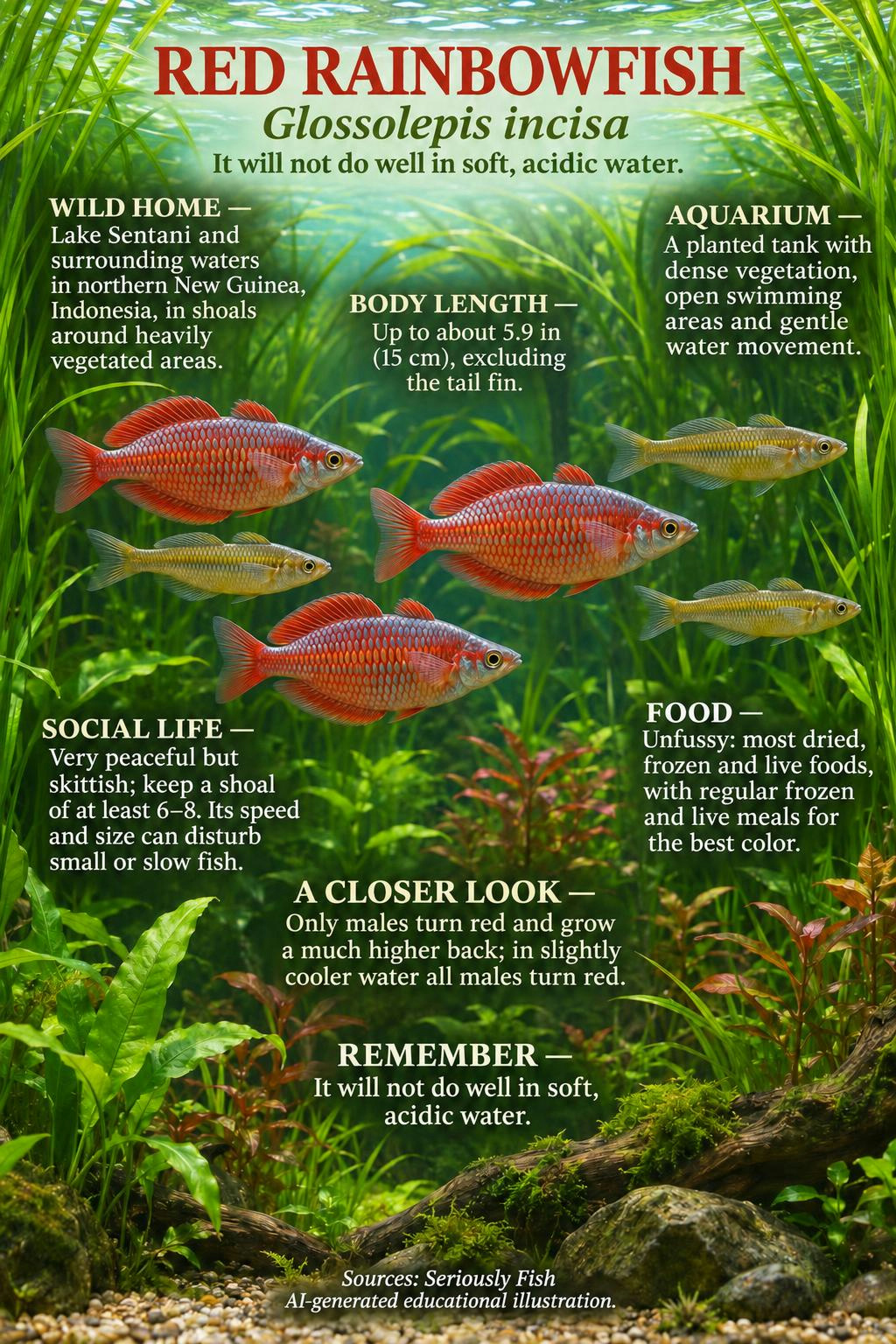
Read the infographic as text
- WILD HOME — Lake Sentani and surrounding waters in northern New Guinea, Indonesia, in shoals around heavily vegetated areas.
- BODY LENGTH — Up to about 5.9 in (15 cm), excluding the tail fin.
- FOOD — Unfussy: most dried, frozen and live foods, with regular frozen and live meals for the best color.
- SOCIAL LIFE — Very peaceful but skittish; keep a shoal of at least 6–8. Its speed and size can disturb small or slow fish.
- AQUARIUM — A planted tank with dense vegetation, open swimming areas and gentle water movement.
- A CLOSER LOOK — Only males turn red and grow a much higher back; in slightly cooler water all males turn red.
- REMEMBER — It will not do well in soft, acidic water.
How to use these figures
Published care ranges and suggested tank sizes are starting points, not guarantees. Tank footprint, group size, filtration, feeding, companions and the individual fish all matter. Standard length excludes the tail fin. Do not abruptly change established water conditions to match a number on a page.
Use a cycled aquarium, monitor water quality and quarantine new arrivals using a suitable species-specific plan. Persistent appetite loss, rapid breathing or weight loss warrants investigation.
Common questions
What should I know before choosing this fish?
It will not do well in soft, acidic water. Very peaceful but skittish; keep a shoal of at least 6–8. Its speed and size can disturb small or slow fish.
What should I feed it?
Unfussy: most dried, frozen and live foods, with regular frozen and live meals for the best color.
Sources & review
Checked November 12, 2026. Retailer care guidance is not a universal biological minimum.