
At a glance
- Adult size
- About 1.8 in body length
- Space
- 24 × 12 in base or larger
- Social needs
- Calmer than some relatives, but best alone or with peaceful schooling cyprinids too big to eat. Males are territorial, so give cover.
Starting guidance, not a universal minimum. See the care details and sources below.
Adult size
Seriously Fish reports a maximum standard length of 45 mm (1.8 in), excluding the tail fin; FishBase gives 4.4 cm SL.
Aquarium space
Seriously Fish says 24 × 12 × 12 inches (60 × 30 × 30 cm; about 54 litres, 14 US gallons) should be the smallest considered.
Water conditions
Seriously Fish lists 68–82°F (20–28°C), pH 6.0–7.5 and 2–12 dGH, and says it is sensitive to deteriorating water, so make regular small water changes. These are maintenance ranges, not targets to swing between; avoid abrupt changes.
Natural home
Submerged bankside vegetation in murky brown water, around pH 6.0, in South Sumatra and West Kalimantan, Indonesia.
Food and feeding
Snails, small crab legs and cockles keep its ever-growing beak worn down. Add shellfish and bloodworm, with only hard pellets as dry food.
Tankmates and behavior
Calmer than some relatives, but best alone or with peaceful schooling cyprinids too big to eat. Males are territorial, so give cover.
Setting up the habitat
Driftwood, plenty of plants including floaters for shade, dried leaf litter and gentle filter flow.
A closer look
Uncommon in the hobby, it is known only from the lower Banjuasin basin in South Sumatra and the Sambas River in West Kalimantan.
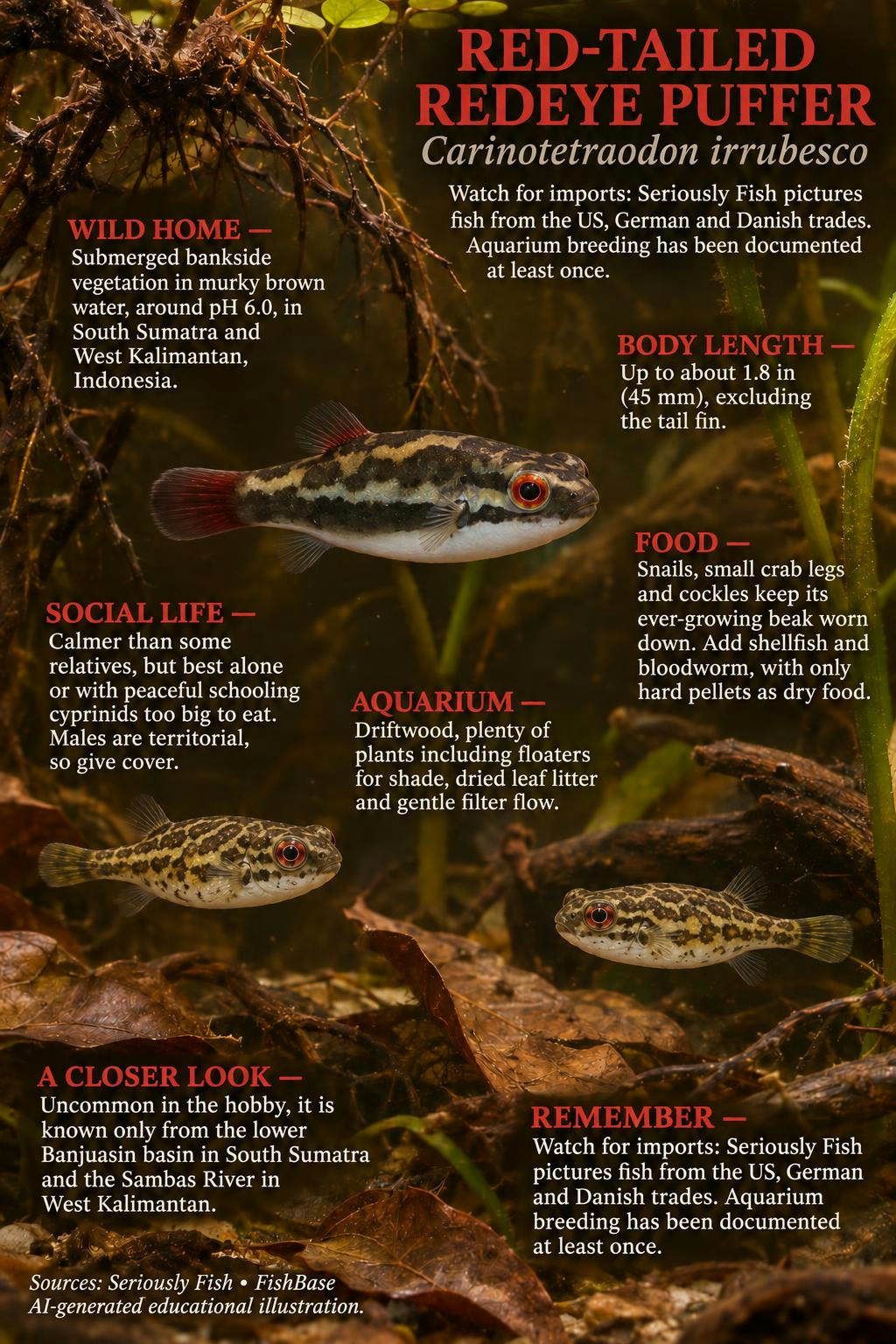
Read the infographic as text
- WILD HOME — Submerged bankside vegetation in murky brown water, around pH 6.0, in South Sumatra and West Kalimantan, Indonesia.
- BODY LENGTH — Up to about 1.8 in (45 mm), excluding the tail fin.
- FOOD — Snails, small crab legs and cockles keep its ever-growing beak worn down. Add shellfish and bloodworm, with only hard pellets as dry food.
- SOCIAL LIFE — Calmer than some relatives, but best alone or with peaceful schooling cyprinids too big to eat. Males are territorial, so give cover.
- AQUARIUM — Driftwood, plenty of plants including floaters for shade, dried leaf litter and gentle filter flow.
- A CLOSER LOOK — Uncommon in the hobby, it is known only from the lower Banjuasin basin in South Sumatra and the Sambas River in West Kalimantan.
- REMEMBER — Watch for imports: Seriously Fish pictures fish from the US, German and Danish trades. Aquarium breeding has been documented at least once.
How to use these figures
Published care ranges and suggested tank sizes are starting points, not guarantees. Tank footprint, group size, filtration, feeding, companions and the individual fish all matter. Standard length excludes the tail fin. Do not abruptly change established water conditions to match a number on a page.
Use a cycled aquarium, monitor water quality and quarantine new arrivals using a suitable species-specific plan. Persistent appetite loss, rapid breathing or weight loss warrants investigation.
Common questions
What should I know before choosing this fish?
Watch for imports: Seriously Fish pictures fish from the US, German and Danish trades. Aquarium breeding has been documented at least once. Calmer than some relatives, but best alone or with peaceful schooling cyprinids too big to eat. Males are territorial, so give cover.
What should I feed it?
Snails, small crab legs and cockles keep its ever-growing beak worn down. Add shellfish and bloodworm, with only hard pellets as dry food.
Why is it rare?
Uncommon in the hobby, it is known only from the lower Banjuasin basin in South Sumatra and the Sambas River in West Kalimantan.
Sources & review
Checked November 12, 2026. Retailer care guidance is not a universal biological minimum.