
At a glance
- Adult size
- 28.3 in (72 cm) TL
- Space
- 500+ US gallons (1,893 L)
- Social needs
- Adults are solitary reef predators; small fishes, crustaceans and mollusks are prey.
Starting guidance, not a universal minimum. See the care details and sources below.
Adult size
Up to 28.3 inches (72 cm) total length. Plan for the adult, not the smaller fish offered for sale.
Aquarium space
Allow at least 500+ US gallons (1,893 L). Provide extensive swimming space and substantial hiding places. Choose a footprint that leaves the adult room to turn and swim; extra height does not replace floor area.
Water conditions
72–78°F (22–26°C); pH 8.1–8.4; dKH 8–12; SG 1.020–1.025. Maintain stable conditions rather than swinging between endpoints.
Natural home
Marine; maintain a stable, fully saltwater aquarium.
Food and feeding
New arrivals may need live marine shrimp; transition to varied marine carnivore foods once settled.
Tankmates and behavior
Adults are solitary reef predators; small fishes, crustaceans and mollusks are prey.
Setting up the habitat
Provide extensive swimming space and substantial hiding places.
A closer look
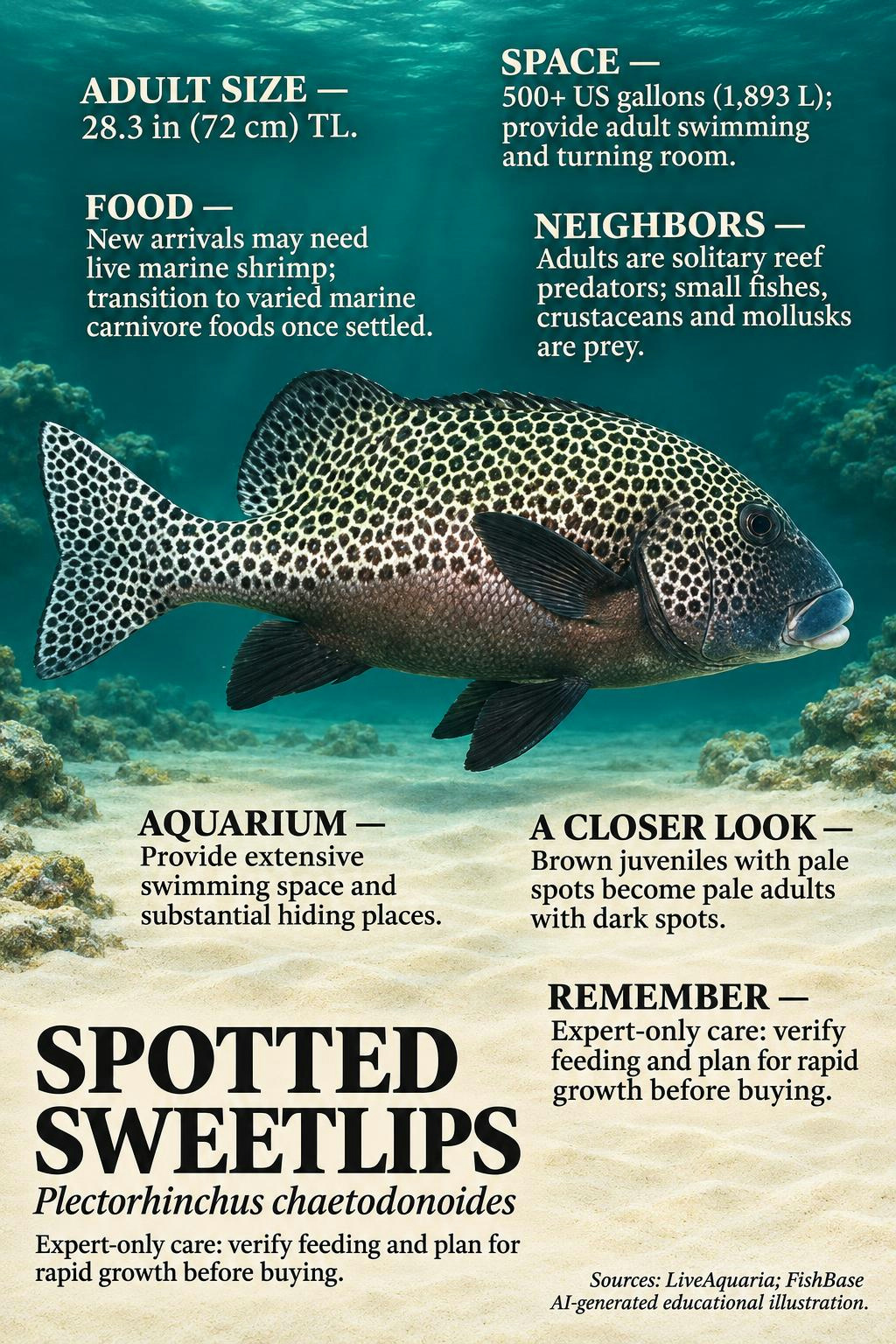
Brown juveniles with pale spots become pale adults with dark spots.
Read the infographic as text
- ADULT SIZE — 28.3 in (72 cm) TL.
- SPACE — 500+ US gallons (1,893 L); provide adult swimming and turning room.
- FOOD — New arrivals may need live marine shrimp; transition to varied marine carnivore foods once settled.
- NEIGHBORS — Adults are solitary reef predators; small fishes, crustaceans and mollusks are prey.
- AQUARIUM — Provide extensive swimming space and substantial hiding places.
- A CLOSER LOOK — Brown juveniles with pale spots become pale adults with dark spots.
- REMEMBER — Expert-only care: verify feeding and plan for rapid growth before buying.
How to use these figures
Published care ranges and suggested tank sizes are starting points, not guarantees. Tank footprint, group size, filtration, feeding, companions and the individual fish all matter. Standard length excludes the tail fin. Do not abruptly change established water conditions to match a number on a page.
Use a cycled aquarium, monitor water quality and quarantine new arrivals using a suitable species-specific plan. Persistent appetite loss, rapid breathing or weight loss warrants investigation.
Common questions
What should I know before choosing this fish?
Expert-only care: verify feeding and plan for rapid growth before buying. Adults are solitary reef predators; small fishes, crustaceans and mollusks are prey.
What should I feed it?
New arrivals may need live marine shrimp; transition to varied marine carnivore foods once settled.
How much space does an adult need?
Allow at least 500+ US gallons (1,893 L). Provide extensive swimming space and substantial hiding places. Choose a footprint that leaves the adult room to turn and swim; extra height does not replace floor area.
Sources & review
Checked November 12, 2026. Retailer care guidance is not a universal biological minimum.
- LiveAquaria — Spotted sweetlips (harlequin sweetlips) — reviewed care reference
- FishBase — Plectorhinchus chaetodonoides