
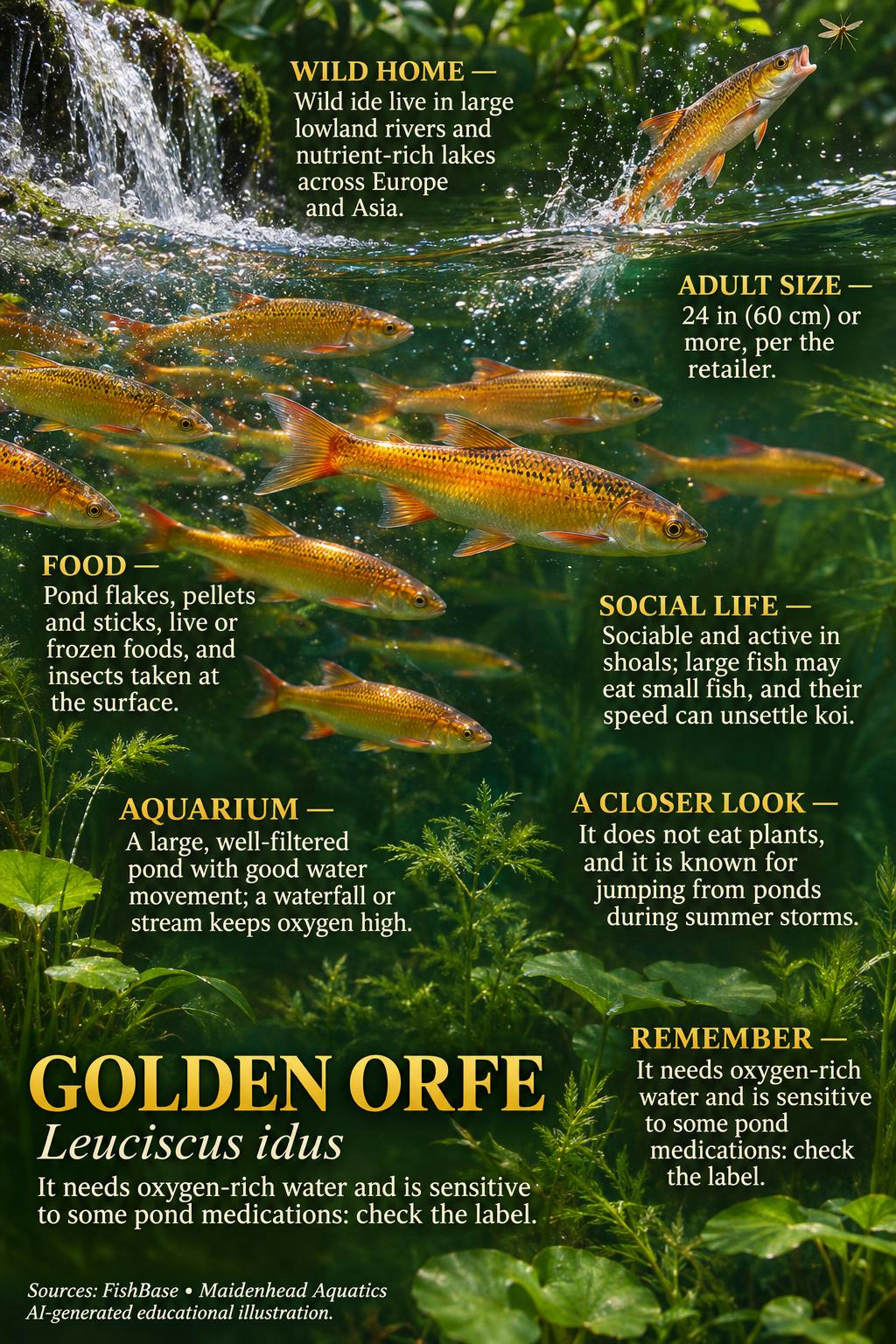
At a glance
- Adult size
- 24 in or more; see details
- Space
- Large, well-aerated pond; see details
- Social needs
- Sociable and active in shoals; large fish may eat small fish, and their speed can unsettle koi.
Starting guidance, not a universal minimum. See the care details and sources below.
Adult size
Maidenhead Aquatics lists a maximum size of 60 cm or more (24 inches or more). FishBase records the wild ide to 85 cm standard length (33.5 inches), with a common length of 30 cm.
Aquarium space
A pond fish. Maidenhead Aquatics says orfe are best suited to large, well-filtered ponds and can struggle in small ponds with slow-moving water. FishBase’s aquarium note reads: at least 10 individuals, an aquarium longer than 200 cm, and not recommended for home aquariums.
Water conditions
Maidenhead Aquatics lists 4–22°C (39–72°F), pH 7.0–8.0 and hardness up to 25 degrees, with high oxygen levels as a special requirement.
Natural home
Wild ide live in large lowland rivers and nutrient-rich lakes across Europe and Asia.
Food and feeding
Pond flakes, pellets and sticks, live or frozen foods, and insects taken at the surface.
Tankmates and behavior
Sociable and active in shoals; large fish may eat small fish, and their speed can unsettle koi.
Setting up the habitat
A large, well-filtered pond with good water movement; a waterfall or stream keeps oxygen high.
A closer look
It does not eat plants, and it is known for jumping from ponds during summer storms.
Read the infographic as text
- WILD HOME — Wild ide live in large lowland rivers and nutrient-rich lakes across Europe and Asia.
- ADULT SIZE — 24 in (60 cm) or more, per the retailer.
- FOOD — Pond flakes, pellets and sticks, live or frozen foods, and insects taken at the surface.
- SOCIAL LIFE — Sociable and active in shoals; large fish may eat small fish, and their speed can unsettle koi.
- AQUARIUM — A large, well-filtered pond with good water movement; a waterfall or stream keeps oxygen high.
- A CLOSER LOOK — It does not eat plants, and it is known for jumping from ponds during summer storms.
- REMEMBER — It needs oxygen-rich water and is sensitive to some pond medications: check the label.
How to use these figures
Published care ranges and suggested tank sizes are starting points, not guarantees. Tank footprint, group size, filtration, feeding, companions and the individual fish all matter. Standard length excludes the tail fin. Do not abruptly change established water conditions to match a number on a page.
Use a cycled aquarium, monitor water quality and quarantine new arrivals using a suitable species-specific plan. Persistent appetite loss, rapid breathing or weight loss warrants investigation.
Common questions
What should I know before choosing this fish?
It needs oxygen-rich water and is sensitive to some pond medications: check the label. Sociable and active in shoals; large fish may eat small fish, and their speed can unsettle koi.
What should I feed it?
Pond flakes, pellets and sticks, live or frozen foods, and insects taken at the surface.
Sources & review
Checked November 12, 2026. Retailer care guidance is not a universal biological minimum.
- FishBase — Leuciscus idus species account
- Maidenhead Aquatics — Golden Orfe care profile — reviewed care reference