
At a glance
- Adult size
- About 6.7 in body length
- Space
- 48 × 12 in base or larger; see details
- Social needs
- It nips fins and some turn spiteful with age; keep one per tank, with robust, active fish.
Starting guidance, not a universal minimum. See the care details and sources below.
Adult size
Seriously Fish reports a maximum standard length of 17 cm (about 6.7 inches), excluding the tail fin. Adult size and aquarium recommendations are not the same thing.
Aquarium space
Seriously Fish lists 48 × 12 × 12 inches (120 × 30 × 30 cm, about 29 US gallons). Group size, adult behavior and additional companions may require more room.
Water conditions
The species profile lists 75–82°F (24–28°C) and pH 7.5–8.5. These are maintenance ranges, not targets to swing between; match the stock’s history and avoid abrupt changes. The same profile lists 10–20 dGH; water hardness is particularly important when choosing compatible fish.
Natural home
Brackish coastal waters and freshwater rivers, streams and lakes from India to the Philippines.
Food and feeding
Shellfish, worms and other live and frozen foods; snails and shell-on foods keep its teeth worn.
Tankmates and behavior
It nips fins and some turn spiteful with age; keep one per tank, with robust, active fish.
Setting up the habitat
Heavy planting with roots, branches and open swimming space over sand.
A closer look
FishBase's aquarium note says it needs salt; the profile suggests marine salt to about 1.005.
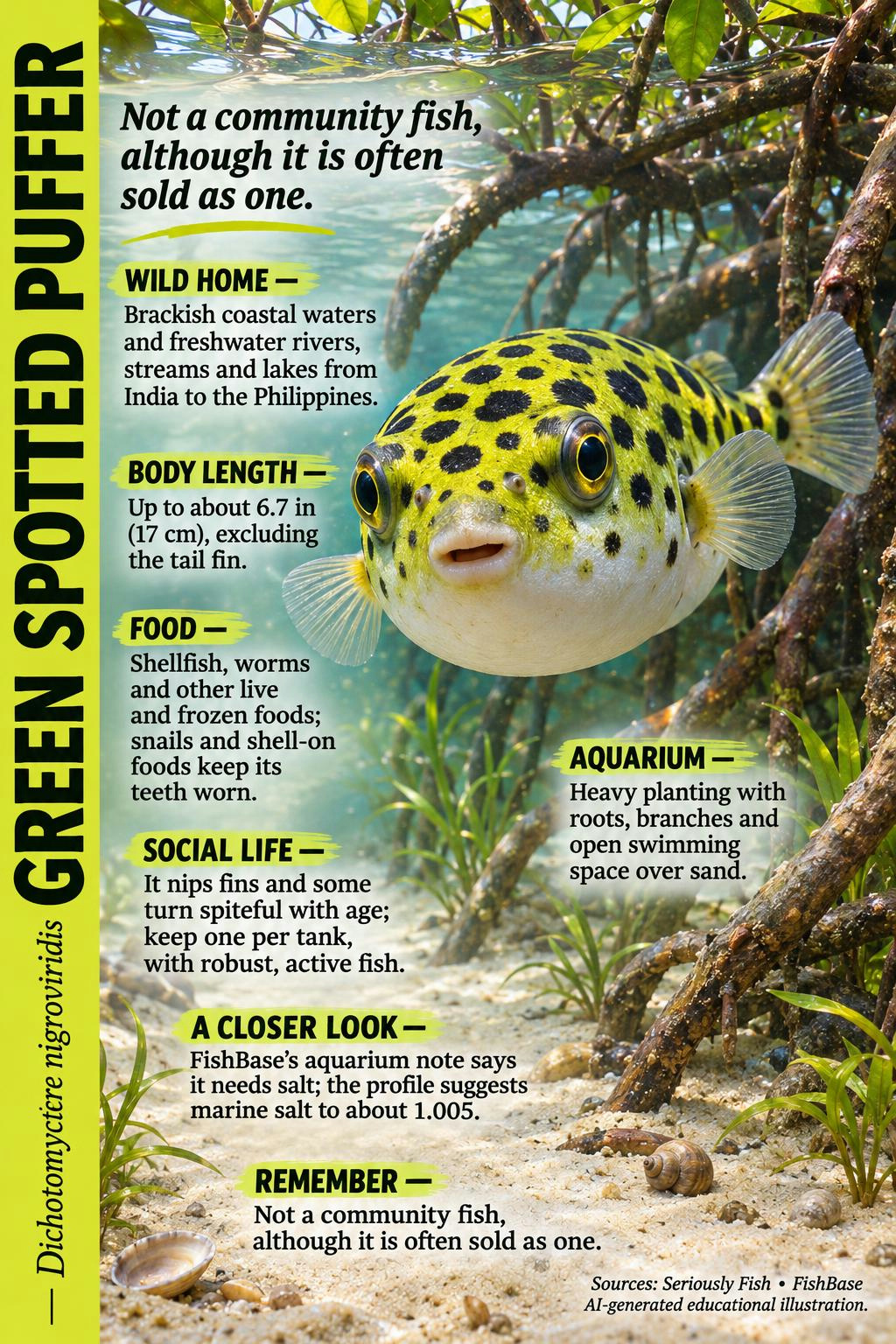
Read the infographic as text
- WILD HOME — Brackish coastal waters and freshwater rivers, streams and lakes from India to the Philippines.
- BODY LENGTH — Up to about 6.7 in (17 cm), excluding the tail fin.
- FOOD — Shellfish, worms and other live and frozen foods; snails and shell-on foods keep its teeth worn.
- SOCIAL LIFE — It nips fins and some turn spiteful with age; keep one per tank, with robust, active fish.
- AQUARIUM — Heavy planting with roots, branches and open swimming space over sand.
- A CLOSER LOOK — FishBase's aquarium note says it needs salt; the profile suggests marine salt to about 1.005.
- REMEMBER — Not a community fish, although it is often sold as one.
How to use these figures
Published care ranges and suggested tank sizes are starting points, not guarantees. Tank footprint, group size, filtration, feeding, companions and the individual fish all matter. Standard length excludes the tail fin. Do not abruptly change established water conditions to match a number on a page.
Use a cycled aquarium, monitor water quality and quarantine new arrivals using a suitable species-specific plan. Persistent appetite loss, rapid breathing or weight loss warrants investigation.
Common questions
What should I know before choosing this fish?
Not a community fish, although it is often sold as one. It nips fins and some turn spiteful with age; keep one per tank, with robust, active fish.
What should I feed it?
Shellfish, worms and other live and frozen foods; snails and shell-on foods keep its teeth worn.
Sources & review
Checked November 12, 2026. Retailer care guidance is not a universal biological minimum.