
At a glance
- Adult size
- About 4.9 in body length
- Space
- 30 × 15 in base or larger; see details
- Social needs
- Suits a hard-water community but may pick on smaller fish as it matures; males can be aggressive to each other.
Starting guidance, not a universal minimum. See the care details and sources below.
Adult size
Seriously Fish reports a maximum standard length of 12.5 cm (about 4.9 inches), excluding the tail fin. Adult size and aquarium recommendations are not the same thing.
Aquarium space
Seriously Fish lists an aquarium of 30 × 15 × 12 inches (76 × 38 × 30 cm, about 23 US gallons). Group size, adult behavior and additional companions may require more room.
Water conditions
The species profile lists 70–79°F (21–26°C) and pH 7.0–8.5. These are maintenance ranges, not targets to swing between; match the stock’s history and avoid abrupt changes. The same profile lists 15–35 dGH; water hardness is particularly important when choosing compatible fish.
Natural home
Heavily vegetated coastal streams, ponds, swamps, canals and ditches from Carolina to Veracruz, often brackish.
Food and feeding
Wild fish are almost wholly herbivorous; include vegetable matter such as blanched spinach or vegetable flake.
Tankmates and behavior
Suits a hard-water community but may pick on smaller fish as it matures; males can be aggressive to each other.
Setting up the habitat
Dense planting with open swimming space; soft-leaved plants may be eaten, and some green algae adds food.
A closer look
Males have a gonopodium and a large, sail-like dorsal fin, which may not develop fully without enough greens.
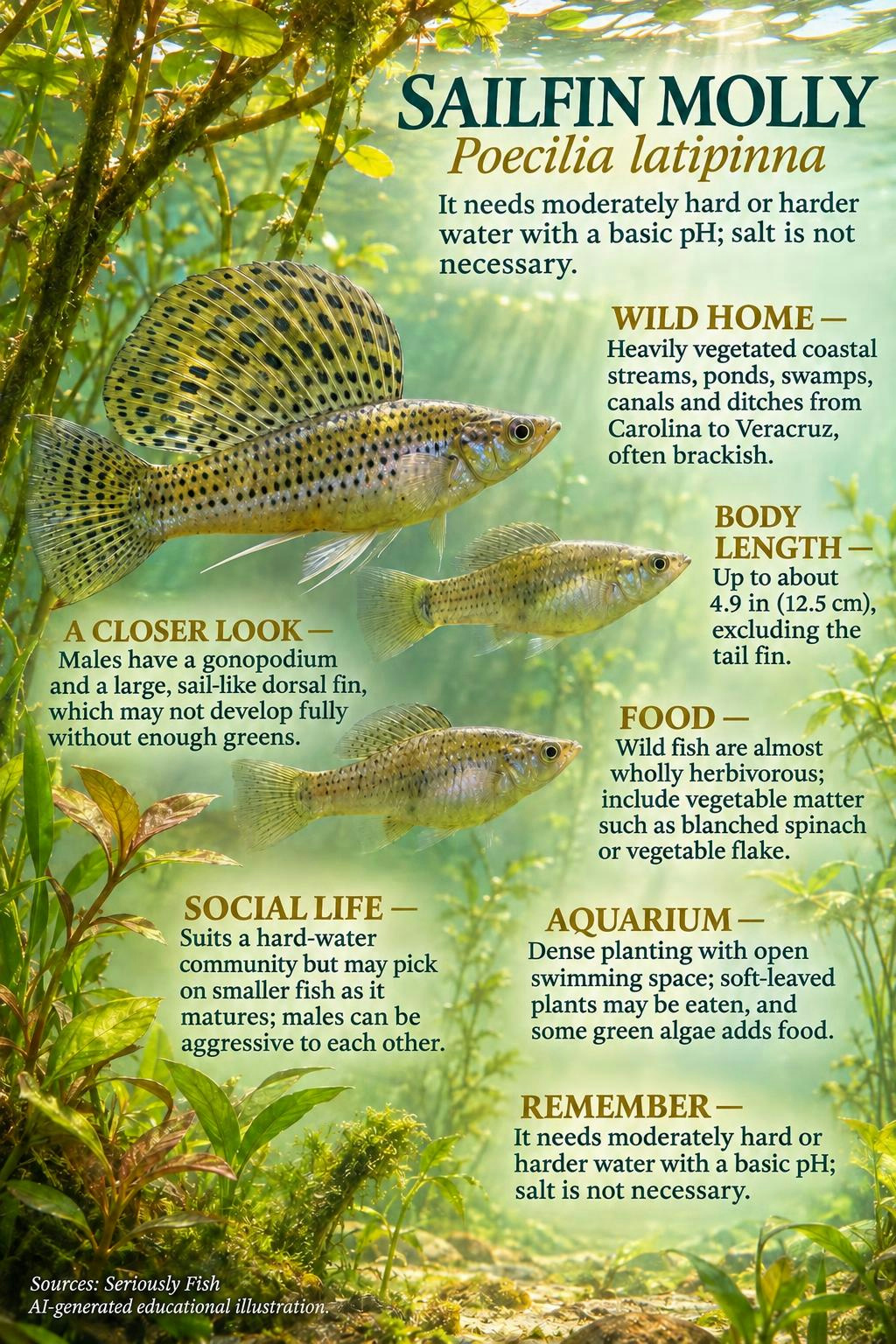
Read the infographic as text
- WILD HOME — Heavily vegetated coastal streams, ponds, swamps, canals and ditches from Carolina to Veracruz, often brackish.
- BODY LENGTH — Up to about 4.9 in (12.5 cm), excluding the tail fin.
- FOOD — Wild fish are almost wholly herbivorous; include vegetable matter such as blanched spinach or vegetable flake.
- SOCIAL LIFE — Suits a hard-water community but may pick on smaller fish as it matures; males can be aggressive to each other.
- AQUARIUM — Dense planting with open swimming space; soft-leaved plants may be eaten, and some green algae adds food.
- A CLOSER LOOK — Males have a gonopodium and a large, sail-like dorsal fin, which may not develop fully without enough greens.
- REMEMBER — It needs moderately hard or harder water with a basic pH; salt is not necessary.
How to use these figures
Published care ranges and suggested tank sizes are starting points, not guarantees. Tank footprint, group size, filtration, feeding, companions and the individual fish all matter. Standard length excludes the tail fin. Do not abruptly change established water conditions to match a number on a page.
Use a cycled aquarium, monitor water quality and quarantine new arrivals using a suitable species-specific plan. Persistent appetite loss, rapid breathing or weight loss warrants investigation.
Common questions
What should I know before choosing this fish?
It needs moderately hard or harder water with a basic pH; salt is not necessary. Suits a hard-water community but may pick on smaller fish as it matures; males can be aggressive to each other.
What should I feed it?
Wild fish are almost wholly herbivorous; include vegetable matter such as blanched spinach or vegetable flake.
Sources & review
Checked November 12, 2026. Retailer care guidance is not a universal biological minimum.