
At a glance
- Adult size
- Recorded maximum 2.4 in; see length definition
- Space
- 30+ US gallons for one
- Social needs
- Rated peaceful, but territorial: keep only one male in an aquarium.
Starting guidance, not a universal minimum. See the care details and sources below.
Adult size
FishBase reports a maximum recorded length of 6 cm (2.4 inches), including the tail. A recorded maximum is not a promise of typical aquarium size. LiveAquaria lists a maximum of 3 inches.
Aquarium space
LiveAquaria says to provide at least a 30 US gallon (114 litre) tank for a single fish, larger for more, with plenty of rock caves.
Water conditions
LiveAquaria lists 72–78°F (22–26°C), pH 8.1–8.4, dKH 8–12 and specific gravity 1.020–1.025. These are retailer fish-care ranges, not a universal prescription for every coral or invertebrate; match the whole system and keep conditions stable. FishBase gives 27–30°C (81–86°F) for the species in the wild.
Natural home
Caves, crevices and ledges near reefs of the Great Barrier Reef and Papua New Guinea, 5–20 m deep, often upside down.
Food and feeding
Chopped fresh or frozen marine fish, squid, mysis and vitamin-enriched brine shrimp, and carnivore foods, at least twice a day.
Tankmates and behavior
Rated peaceful, but territorial: keep only one male in an aquarium.
Setting up the habitat
30 gallons or more for one fish, with plenty of rock caves for hiding; rated reef compatible.
A closer look
Males brood the egg mass in their mouths, and FishBase notes that breeding in the aquarium is possible.
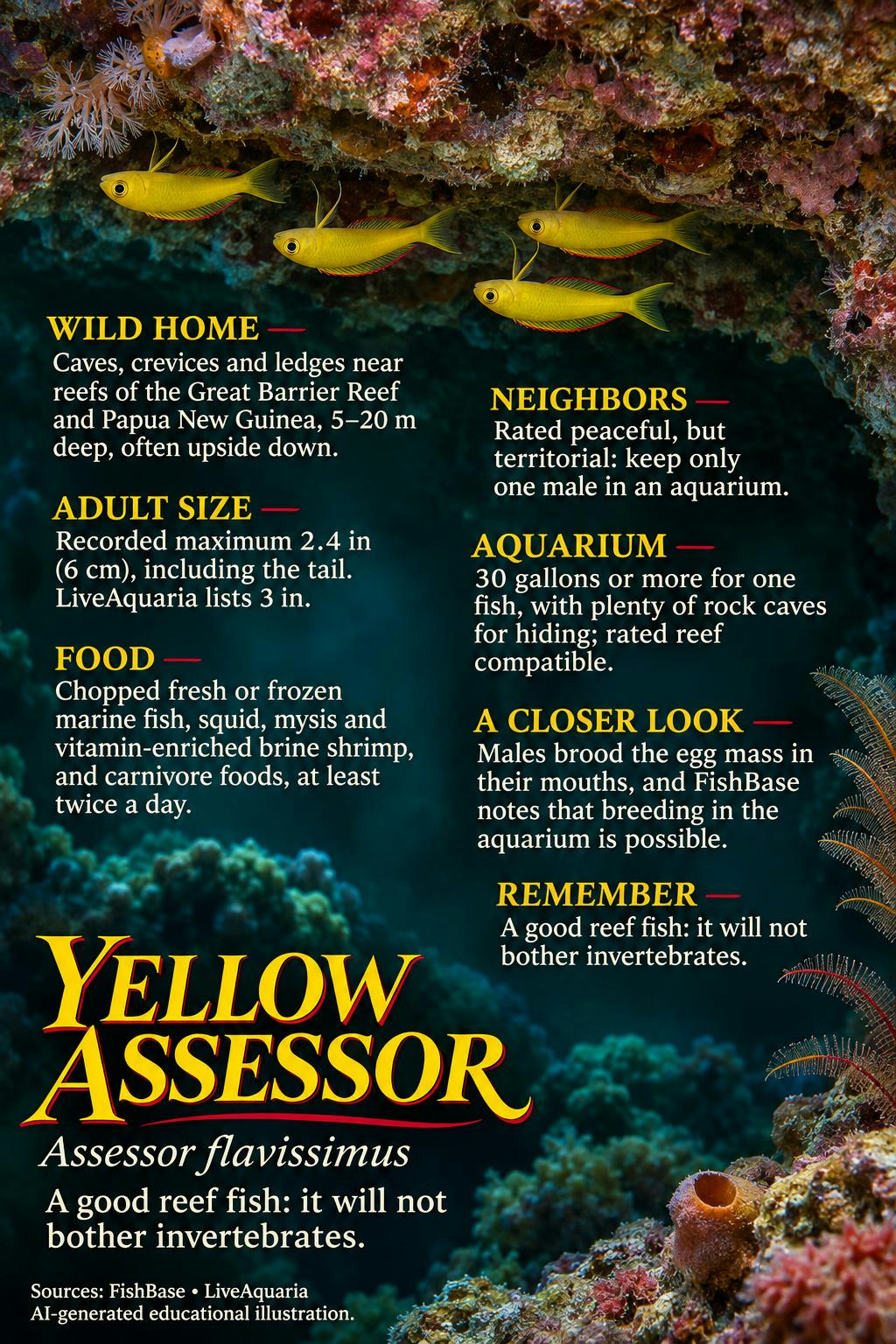
Read the infographic as text
- WILD HOME — Caves, crevices and ledges near reefs of the Great Barrier Reef and Papua New Guinea, 5–20 m deep, often upside down.
- ADULT SIZE — Recorded maximum 2.4 in (6 cm), including the tail. LiveAquaria lists 3 in.
- FOOD — Chopped fresh or frozen marine fish, squid, mysis and vitamin-enriched brine shrimp, and carnivore foods, at least twice a day.
- NEIGHBORS — Rated peaceful, but territorial: keep only one male in an aquarium.
- AQUARIUM — 30 gallons or more for one fish, with plenty of rock caves for hiding; rated reef compatible.
- A CLOSER LOOK — Males brood the egg mass in their mouths, and FishBase notes that breeding in the aquarium is possible.
- REMEMBER — A good reef fish: it will not bother invertebrates.
How to use these figures
Published care ranges and suggested tank sizes are starting points, not guarantees. Tank footprint, group size, filtration, feeding, companions and the individual fish all matter. Standard length excludes the tail fin. Do not abruptly change established water conditions to match a number on a page.
Use a cycled aquarium, monitor water quality and quarantine new arrivals using a suitable species-specific plan. Persistent appetite loss, rapid breathing or weight loss warrants investigation.
Common questions
What is the main consideration before buying?
A good reef fish: it will not bother invertebrates. Rated peaceful, but territorial: keep only one male in an aquarium.
What should this fish eat?
Chopped fresh or frozen marine fish, squid, mysis and vitamin-enriched brine shrimp, and carnivore foods, at least twice a day.
Sources & review
Checked November 12, 2026. Retailer care guidance is not a universal biological minimum.
- FishBase — Assessor flavissimus species account
- LiveAquaria — Gold Assessor Basslet care profile — reviewed care reference