
At a glance
- Adult size
- Up to about 2 inches (5 cm) standard length, excluding the tail fin
- Aquarium space
- At least a 36 × 12 inch (90 × 30 cm) base.
- Feeding
- Small balanced foods; spread food across the group.
- Compatibility
- At least 8–10; active companions sharing suitable temperatures.
Starting guidance, not a universal minimum. See the care details and sources below.
Adult size
Up to about 2 inches (5 cm) standard length, excluding the tail fin
Aquarium space
Seriously Fish recommends a 36 × 12 inch (90 × 30 cm) base even for a small group because of its activity. Length and swimming room matter more than a gallon number alone.
Water conditions
64–77°F (18–25°C), pH 6.0–8.0 and 5–20 dGH are the general maintenance ranges in the species profile. A heater may not be needed in a stable suitable room, but measure the coldest water temperature before deciding.
Natural home
South Asian floodplain waters, including slow or still pools and rice-field margins. Older reports of its exact geographic range include likely misidentifications.
Food and feeding
Offer small balanced prepared foods and varied live or frozen invertebrates. Spread food so energetic individuals do not monopolize it.
Tankmates and behavior
Keep at least 8–10. Select companions suited to the same cooler tropical range and active swimming; do not assume that a small fish belongs in a tiny tank.
Setting up the habitat
Leave a long open swimming lane with planting or shelter around it. Provide a secure lid, good water quality and appropriate circulation without turning the whole tank into a torrent.
A closer look
Horizontal blue stripes are the hallmark of the familiar striped form. It scatters eggs and does not provide parental care; adults can eat eggs.
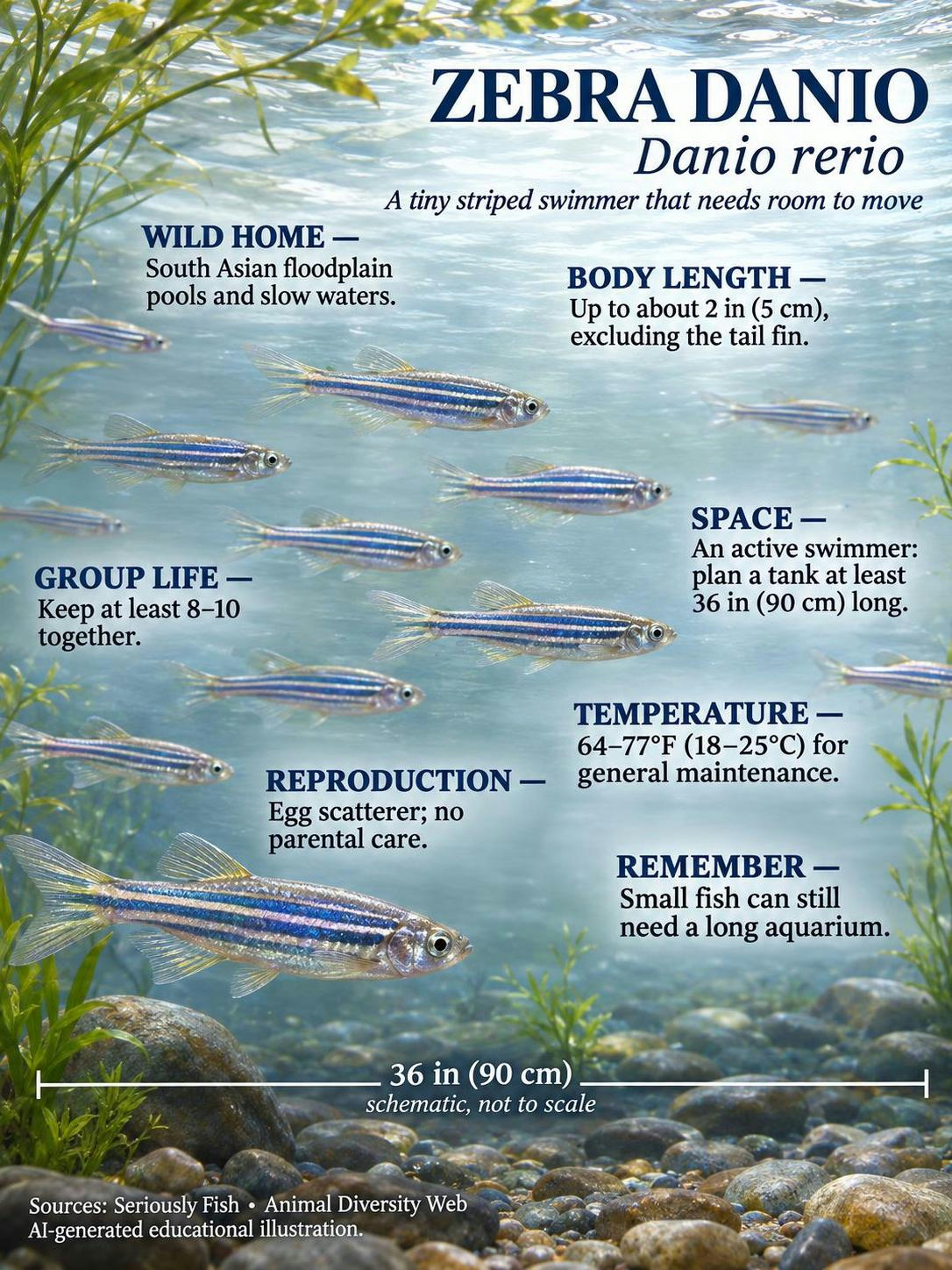
Read the infographic as text
- WILD HOME — South Asian floodplain pools and slow waters.
- BODY LENGTH — Up to about 2 in (5 cm), excluding the tail fin.
- GROUP LIFE — Keep at least 8–10 together.
- SPACE — An active swimmer: plan a tank at least 36 in (90 cm) long.
- TEMPERATURE — 64–77°F (18–25°C) for general maintenance.
- REPRODUCTION — Egg scatterer; no parental care.
- REMEMBER — Small fish can still need a long aquarium.
How to use these figures
Published care ranges and suggested tank sizes are starting points, not guarantees. Tank footprint, group size, filtration, feeding, companions and the individual fish all matter. Standard length excludes the tail fin. Do not abruptly change established water conditions to match a number on a page.
Use a cycled aquarium, monitor water quality and quarantine new arrivals using a suitable species-specific plan. Persistent appetite loss, rapid breathing or weight loss warrants investigation.
Common questions
Does a zebra danio need a heater?
64–77°F (18–25°C), pH 6.0–8.0 and 5–20 dGH are the general maintenance ranges in the species profile. A heater may not be needed in a stable suitable room, but measure the coldest water temperature before deciding.
Why does a small danio need a long tank?
Seriously Fish recommends a 36 × 12 inch (90 × 30 cm) base even for a small group because of its activity. Length and swimming room matter more than a gallon number alone.
Sources & review
Checked November 12, 2026. Retailer care guidance is not a universal biological minimum.