
A newly named spined loach from eastern China has a bold black stripe along each side, with irregular, cloud-like blotches across its back. Cobitis laterstriata was described in ZooKeys on November 2 by Xue-Yuan Li and colleagues, including researchers at the Chinese Academy of Sciences. It is known from waterways in Anhui and Zhejiang provinces.1
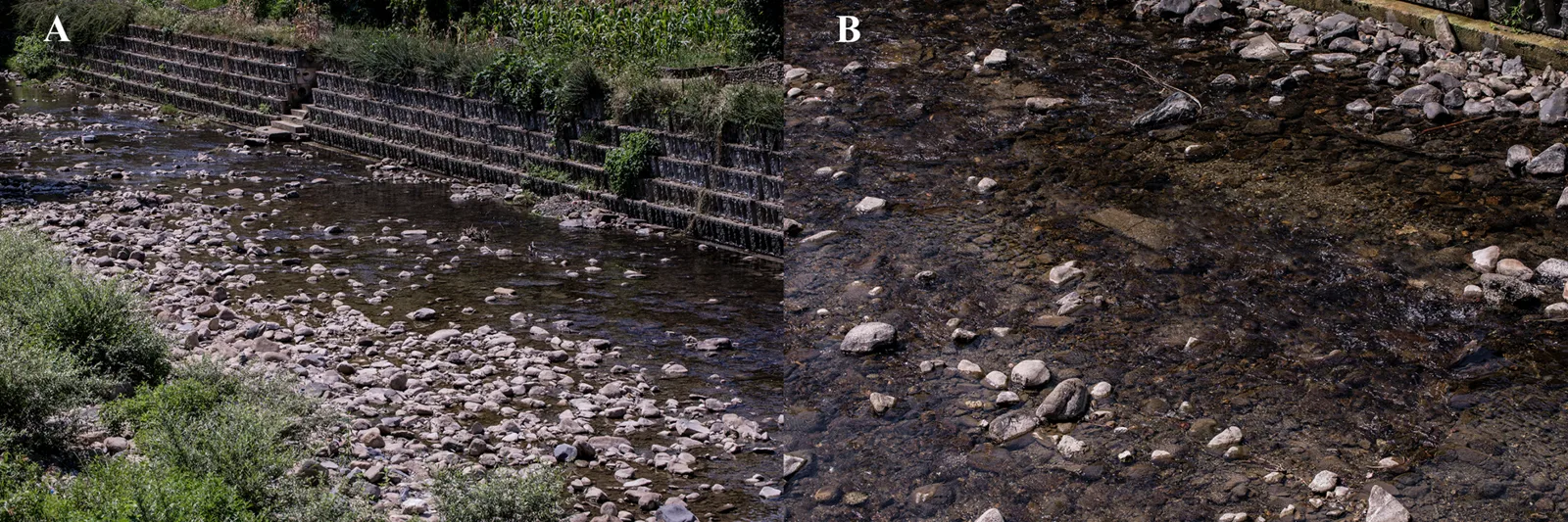
The fish lives in shallow rivers over gravel. The recorded sites include tributaries of the Shuiyangjiang River in Anhui and the Tianmuxi River in Zhejiang. The paper’s habitat photographs show a shallow, stony channel and a closer view of its riverbed, giving loach enthusiasts a documented look at where this species occurs.1
Its stripe runs from behind the gill cover to the base of the tail. A clear, unmarked zone separates the stripe from the blotches above, while 10–15 irregular black blotches sit below it. The species name refers to that lengthwise stripe. The diagnosis also uses details less obvious in a photograph, including a short tail stalk, six branched dorsal-fin rays and four branched anal-fin rays.1
The team compared body measurements and examined mitochondrial cytochrome b, a DNA marker used to investigate relationships. Nine samples of the new loach grouped together in the genetic analyses, with Cobitis fimbriata recovered as its closest relative. The reported genetic distance between the two was 3.55 percent. The anatomical and genetic evidence together supported recognizing a separate species.1
For aquarists, this is identification and natural-history news. The description does not establish commercial availability or provide a tested aquarium temperature range, minimum tank size or breeding method. Its shallow gravel habitat is useful background, but it cannot by itself supply those husbandry requirements.1
Sources and notes 1 reference
- Li and colleagues: original description of Cobitis laterstriata, including habitat photographs (opens in a new tab)November 2, 2026; full article XML read
Background: November 2, 2026 (paper). Published November 15, 2026.
Research and reporting dates are kept as published, and older work isn’t presented as news. Product claims are attributed to their makers. Photos are illustrative and don’t show store stock.