
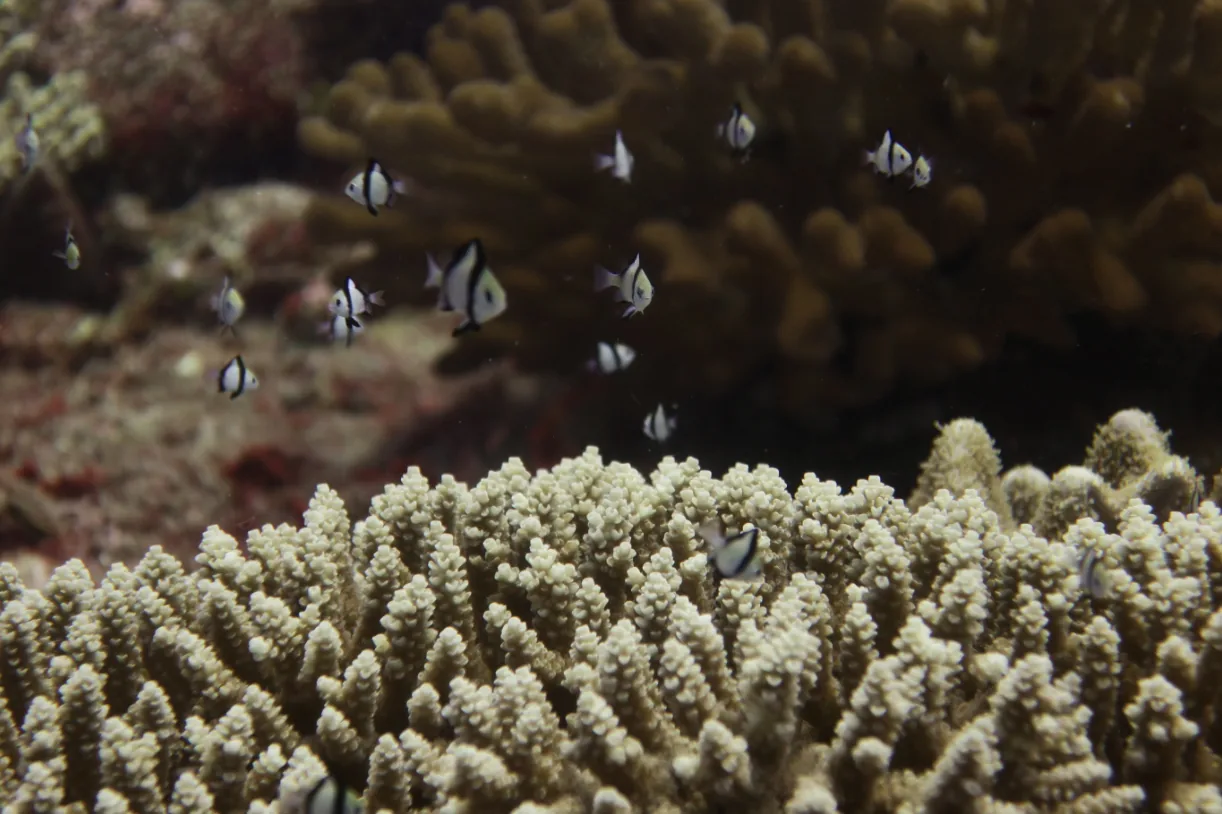
Playing recordings of a healthy reef attracted 4 to 14 times more fish larvae to artificial habitats in Hawaiʻi than matching habitats beside a silent speaker. Mature fish appeared in similar numbers at both sites. For aquarists interested in how young reef fish find a home, the result shows that a habitat’s sound can influence which larvae turn up.12
The Scripps-led team worked in Kāneʻohe Bay, Oʻahu, during three spawning periods in August 2023 and June and July 2024. Researchers placed matching habitat structures at treatment and control sites and switched which location received playback between deployments, reducing the chance that one favorable location explained the result. Larval numbers at both sites peaked around the new moon.2
Autonomous cameras watched the structures without divers repeatedly approaching the fish. The cameras operated in daylight without external lighting; the reef recordings played at night. That means the photographs measured larvae present after nighttime playback, rather than continuously tracking every arrival. The researchers could not reliably identify the larvae to species from those images.2
Scripps reported the work on October 8 alongside a companion coral-settlement study. The recordings included fish sounds and the crackle of snapping shrimp, components of a living reef’s acoustic environment. Artificial shelter and sound were being tested as restoration tools, not as aquarium accessories.1
Higher counts are encouraging, but they do not establish that the extra larvae survived to adulthood or rebuilt a fish community. This field experiment also does not provide a tested sound level or playback routine for a home reef tank.2
Sources and notes 2 references
- Scripps — Healthy Reef Sounds Can Boost Coral and Fish Recovery Efforts (opens in a new tab)October 8, 2026
- Boulais and colleagues — Autonomous cameras reveal larval reef fish responses to acoustic enrichment and lunar phase (opens in a new tab)2026; field trials August 2023 and June–July 2024
Background: Scripps research report, October 8, 2026; fieldwork 2023–2024. Published November 7, 2026.
Research and reporting dates are kept as published, and older work isn’t presented as news. Product claims are attributed to their makers. Photos are illustrative and don’t show store stock.