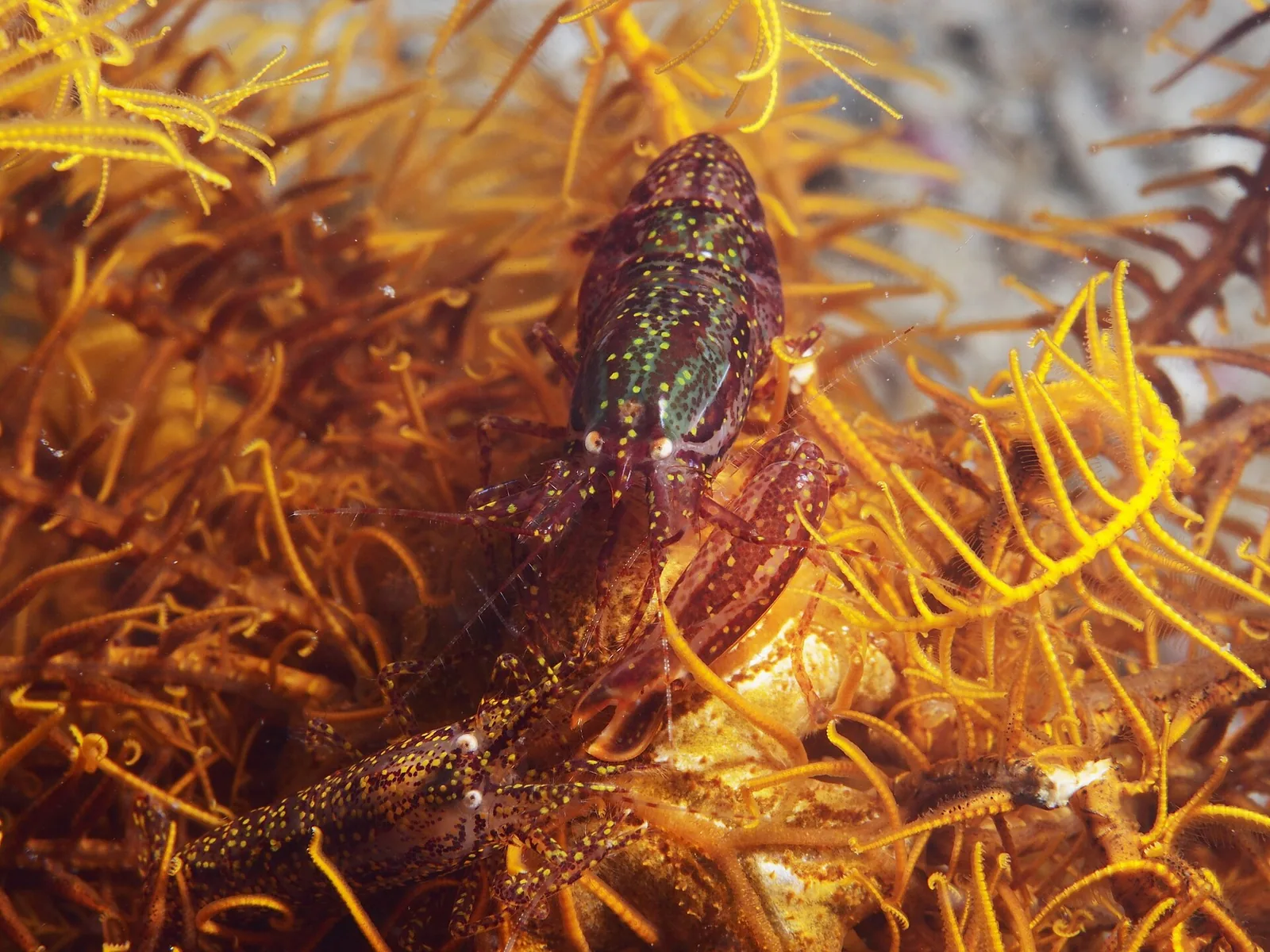
Some of the loudest animals on a reef are a couple of centimeters long, under an inch. Snapping shrimp, also called pistol shrimp, are a group of species with one oversized claw that can grow to half the size of the body. NOAA’s sanctuary scientists put their snaps at 183 to 210 decibels, which ranks them among the loudest sound makers in the ocean.2
A team led by Michel Versluis filmed the claw of Alpheus heterochaelis at high speed while recording with a hydrophone, and reported in Science in 2000 that the sound comes from a bubble rather than the claw itself. The claw closes so fast that it fires a jet of water quick enough to make a cavitation bubble, and the snap is heard when that bubble collapses. The snap can stun or kill small prey.1
Together, their snaps make the crackle divers hear, which NOAA compares to milk poured on Rice Krispies. Its listening project found snapping varies by place, season and time of day, generally rising as water warms. Researchers now track it as a possible sign of how well a damaged habitat is recovering.2
Sources and notes 2 references
- Versluis et al. — How Snapping Shrimp Snap: Through Cavitating Bubbles, Science (opens in a new tab)September 22, 2000
- NOAA Office of National Marine Sanctuaries — Oh Snap! What Tiny Shrimp Can Tell Us About Habitat Health (opens in a new tab)December 2021
Background: Earlier research: Science, September 22, 2000; NOAA Office of National Marine Sanctuaries, December 2021. Published November 1, 2026.
Research and reporting dates are kept as published, and older work isn’t presented as news. Product claims are attributed to their makers. Photos are illustrative and don’t show store stock.