
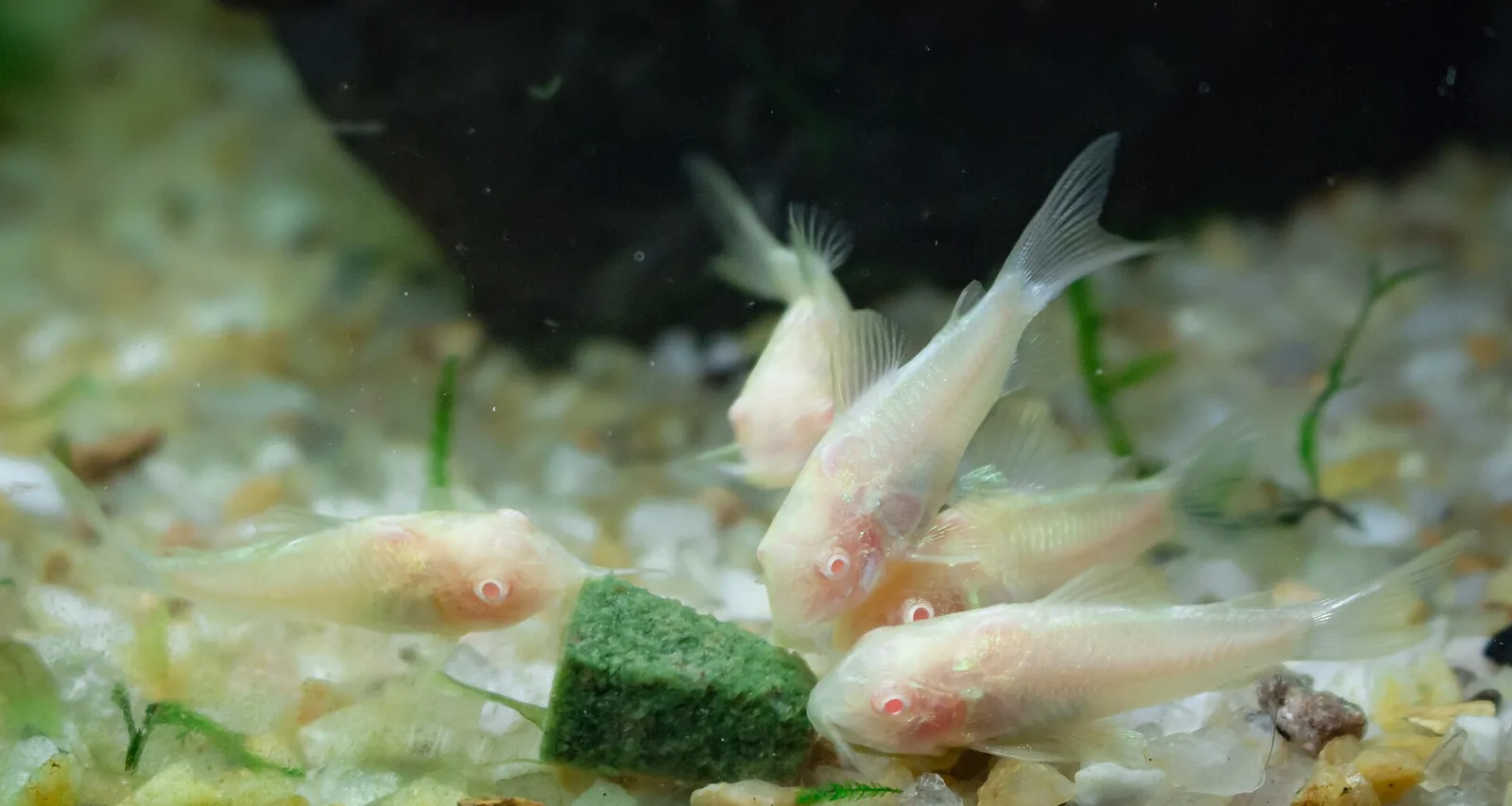
The bronze corydoras, Corydoras aeneus, comes from South America east of the Andes, from Colombia and Trinidad south to the La Plata basin. FishBase describes it living mostly in quiet, shallow water over soft bottoms, with adults in schools of 20 to 30.1
In the aquarium trade its albino form is just as familiar. Aqueon notes that an albino cory or one of its relatives is one of the first bottom feeders many aquarists buy.2
A fish that breathes with its gut
Watch a group for a while and one will dart to the surface and back. Corydoras aeneus is a facultative air breather that takes air into its intestine, between once and 45 times an hour according to FishBase.1
Aqueon calls the occasional trip normal, but says constant gasping at the surface can mean poor water quality or low oxygen.2
Setting up for them
Aqueon suggests a 30-gallon aquarium for most species, sand or fine gravel with rounded edges so the fish don’t damage their barbels while foraging, open space near the front and some cover. Captive-bred corydoras tolerate a wide range of water chemistry, but the guide insists on very clean water and says they should never go into a new or neglected aquarium.2
Living with them
Buy them as a group of five or more; different species often school together. Aqueon describes corys as active in the daytime, and warns that their fin spines are sharp and in some species carry a mild toxin, so handle them carefully.2
FishBase lists the wild fish as nocturnal, so expect some evening activity too. It records worms, crustaceans, insects and plant matter in their natural diet; in a tank, that points to sinking foods that reach the bottom.1
Sources and notes 2 references
- FishBase — Corydoras aeneus species summary (opens in a new tab)Accessed November 1, 2026
- Aqueon — Corydoras Catfish Care Guide (opens in a new tab)Accessed November 1, 2026
Background: Species profile; Aqueon care guide and FishBase, accessed November 1, 2026. Published November 1, 2026.
Research and reporting dates are kept as published, and older work isn’t presented as news. Product claims are attributed to their makers. Photos are illustrative and don’t show store stock.