
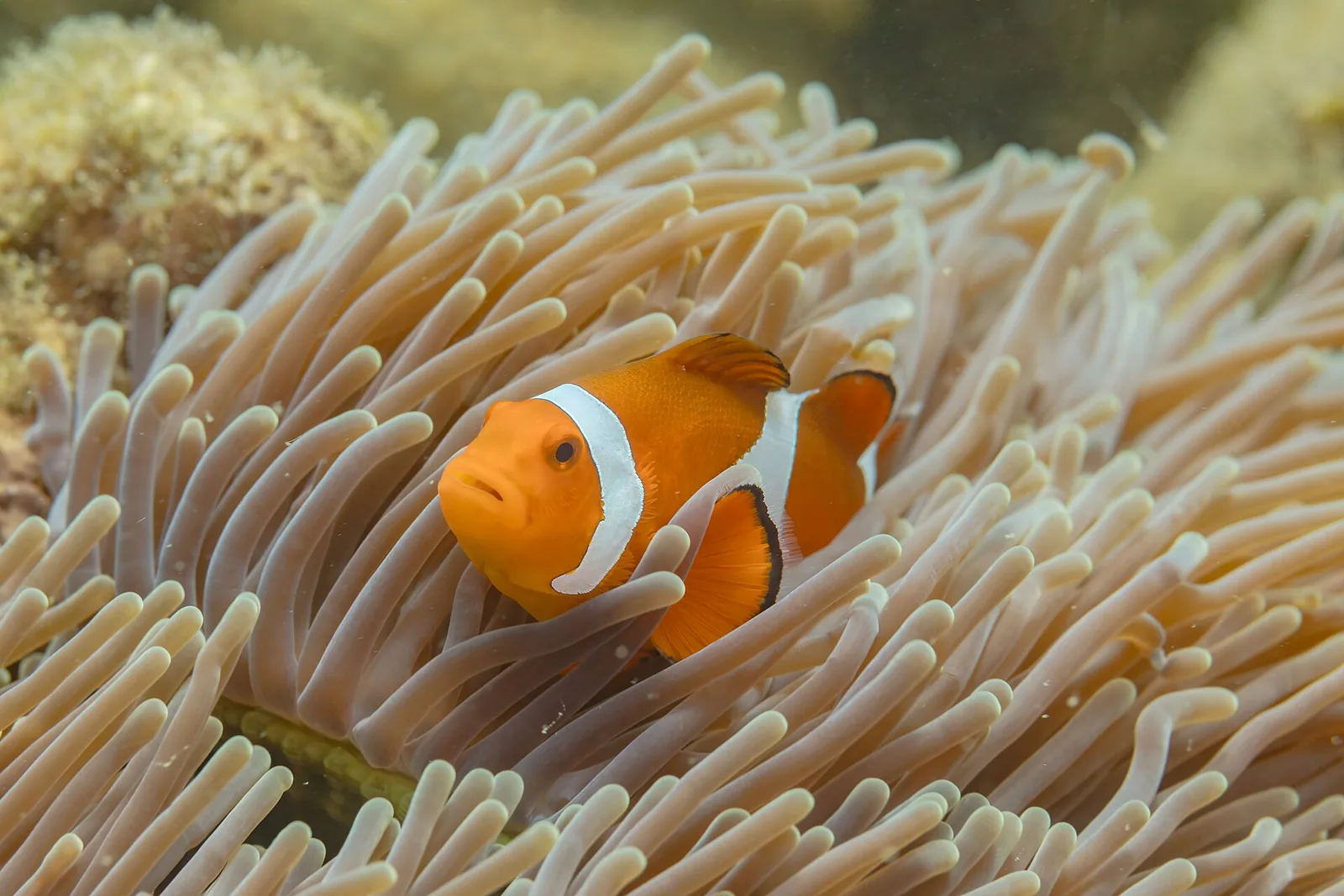
Most pictures of a clownfish include the anemone it is tucked into, so it is easy to assume a tank needs one. It doesn’t. The Ornamental Aquatic Trade Association’s care sheet says that although most clownfish live with anemones in the wild, anemones are not required to keep clownfish successfully in aquariums.1
Where does the idea come from?
From the reef. The Florida Museum describes each clown anemonefish forming a relationship with a particular sea anemone, most often the magnificent sea anemone, Heteractis magnifica. The fish gets used to its host by brushing against the tentacles until its mucus protects it from the stings. The anemone shelters the fish and its nest, and may in turn benefit when the fish eats parasites and fans water through its tentacles.2
What does an aquarium clownfish need instead?
The care sheet’s list is about water and space. Ammonia and nitrite should be at zero, and it recommends an aquarium of at least 60 liters (about 16 gallons) for a single pair of the smaller species, such as common or percula clownfish, and at least 120 liters (about 32 gallons) for larger species.1
What if you want an anemone anyway?
Then plan for a second animal. The association suggests asking about the setup needed to keep an anemone healthy and choosing a species your clownfish will live with.1
Where the fish comes from matters as well. The Florida Museum notes that clown anemonefish are raised in aquaculture facilities, which reduces pressure on wild populations, and that over-collecting for the aquarium trade has hurt some local populations.2
Sources and notes 2 references
- Ornamental Aquatic Trade Association — How to look after clown fish (opens in a new tab)Undated care sheet
- Florida Museum — Clown Anemonefish (Discover Fishes) (opens in a new tab)Undated species profile
Background: OATA care sheet, undated; Florida Museum species profile, undated. Published November 1, 2026.
Research and reporting dates are kept as published, and older work isn’t presented as news. Product claims are attributed to their makers. Photos are illustrative and don’t show store stock.