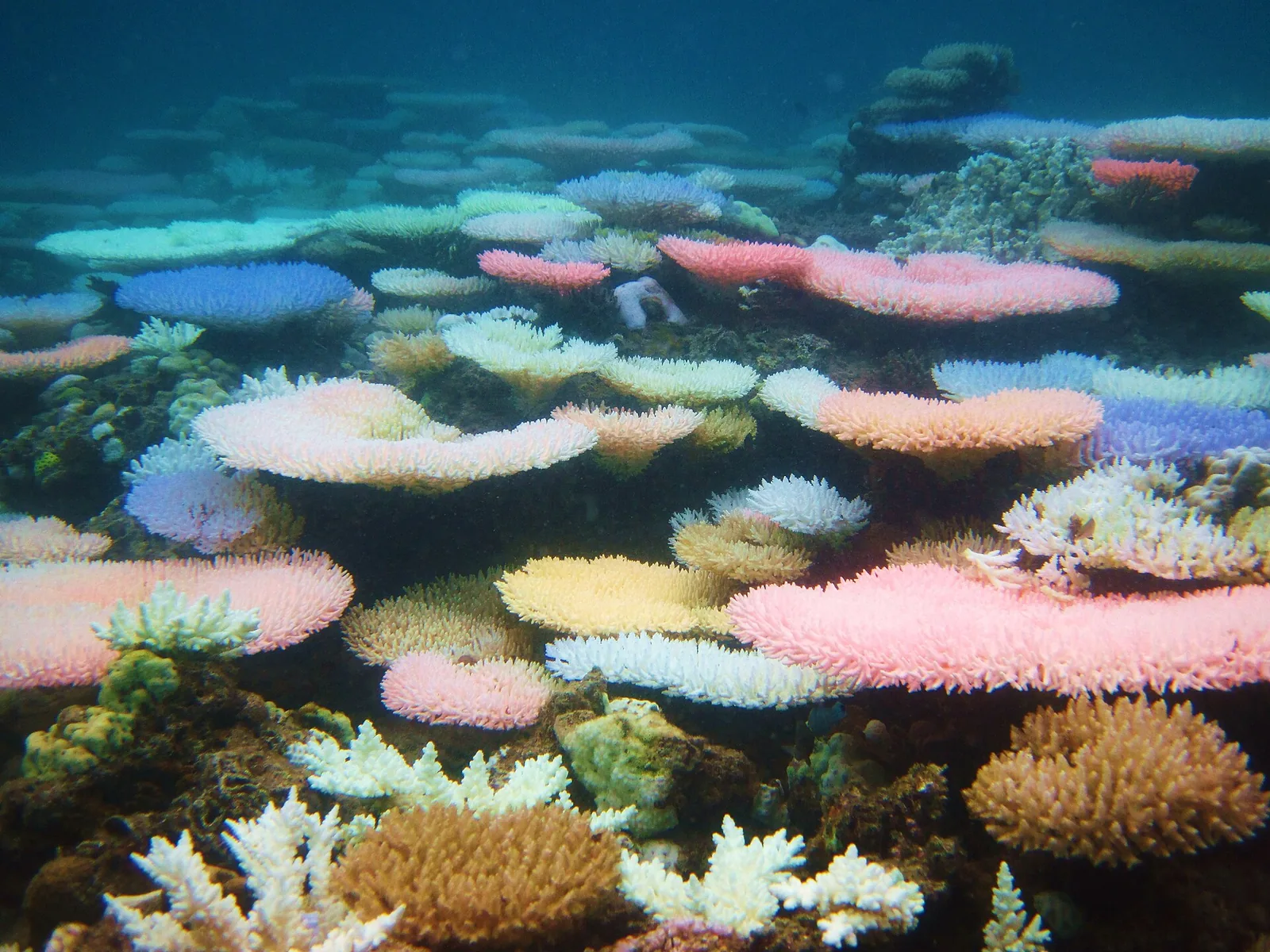
A bleached coral can get its algae back from a healthy fragment of the same colony. In Science Advances on October 14, 2026, a Stanford team led by Danny Collins reported that brief contact lets the symbiotic algae pass through fused tissue into the bleached piece, which then recovers on its own.1
In the first trial, all five bleached fragments that touched a healthy partner recovered within seven weeks, while the five kept a few millimeters away died. A single week of contact was enough, and in some cases three days. After a week the algae were doubling about every four days, up to ten times faster than most recovery recorded on reefs.12
The tissue only fuses between corals of the same genet, so pairings of different colonies turned antagonistic. Stanford’s account notes that the method needs a healthy, genetically identical copy of every bleached coral, which isn’t feasible at reef scale, and the team plans to explore other ways of delivering the algae.12
Sources and notes 2 references
- Collins et al. — Rapid coral bleaching recovery via symbiont transfer from healthy corals, Science Advances (opens in a new tab)Published October 14, 2026
- Stanford Doerr School of Sustainability — Stanford scientists discover a way to reverse coral bleaching at record speed (opens in a new tab)October 14, 2026
Background: October 14, 2026 (Science Advances; Stanford Doerr School of Sustainability). Published November 1, 2026.
Research and reporting dates are kept as published, and older work isn’t presented as news. Product claims are attributed to their makers. Photos are illustrative and don’t show store stock.