A breeder can have eggs, clean water and attentive care, yet still be missing the meal that makes the next stage possible. For marine fish larvae, food must fit a tiny mouth, trigger a hunting response and deliver the right nutrients. A tank full of unsuitable prey is not a nursery full of fed fish.3
That problem sits behind the University of Florida’s February 25, 2025 account of ornamental-fish research. Its teams had raised blue tangs in captivity, but the achievement depended partly on learning to grow the live foods larvae needed at different stages. The university described a practical ambition: develop methods that fish farmers could use, rather than leave each producer to solve the life cycle alone.1
How clownfish differ
Clownfish offer a useful contrast. Their eggs adhere to a surface, which can be a tile or clay pot in a breeding system; the male tends the nest. The larvae hatch relatively well developed and can take enriched rotifers as their first food. Many pelagic spawners release buoyant eggs and hatch less-developed larvae that need smaller prey. The successful clownfish routine is not a universal recipe.2
Even that contrast has exceptions. UF/IFAS notes that damselfishes also lay eggs on surfaces and provide parental care, yet their larvae often need small copepod nauplii. Watching where a fish lays its eggs cannot tell a breeder everything about what will hatch. The larva’s capabilities matter as much as the parents’ behavior.2
Growing the food
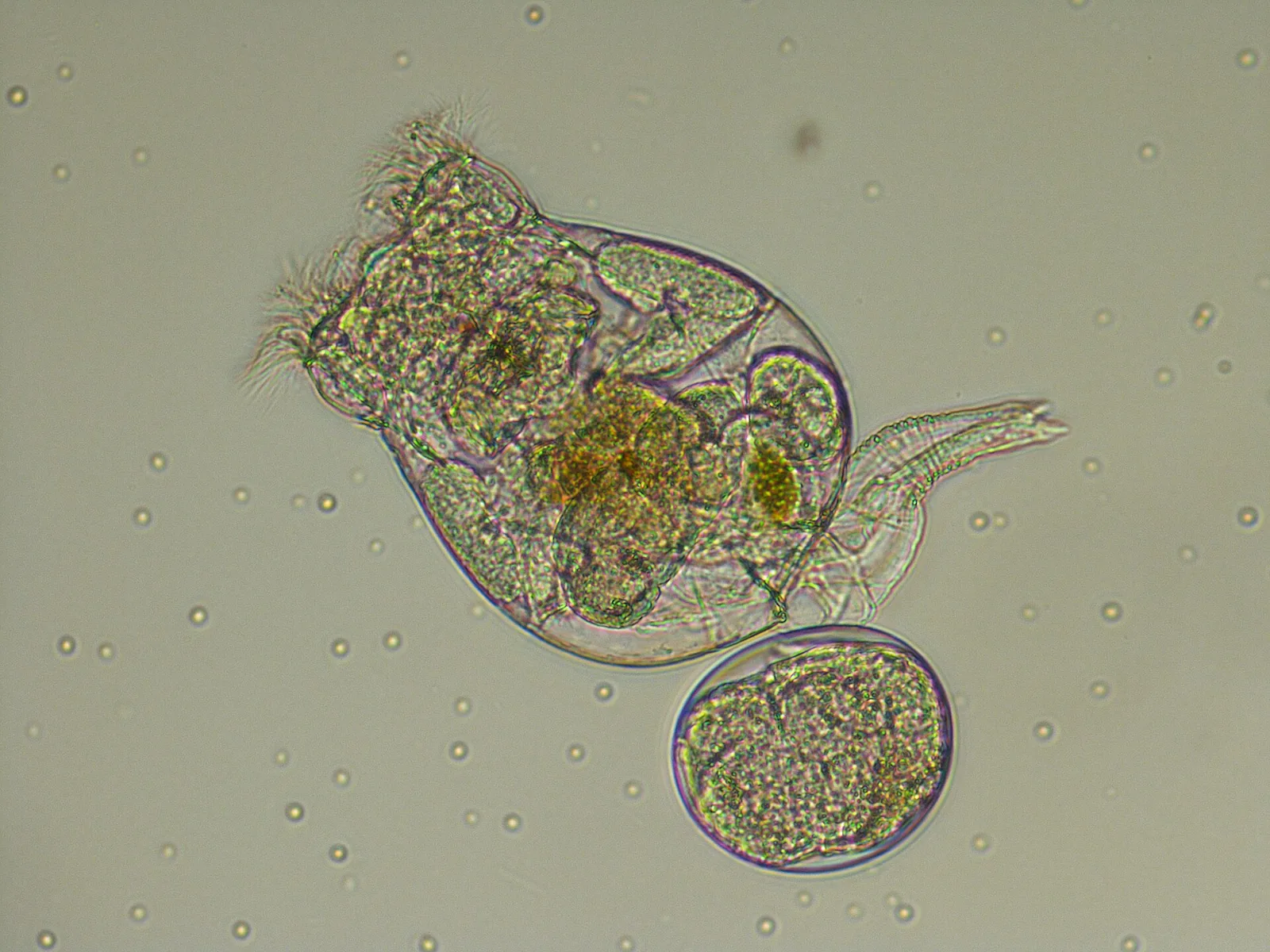
Rotifers are useful because they can be grown densely, but breeders enrich them to improve their nutritional value. Brine shrimp are convenient to hatch, yet can be too large for the earliest feeding stage. Copepod nauplii offer another combination of size, movement and nutrition; maintaining their supply brings its own culture challenges. The hatchery is managing food organisms as well as fish.3
This explains why a first breeding success and dependable production are different milestones. UF’s account describes intensive labor and cost in developing larval diets and environments. A farmer needs a method that can be repeated, not simply evidence that one batch once survived. The research is about making that passage less precarious.1
Captive breeding can offer an alternative to collecting fish, but UF’s account also acknowledges uncertainty about wild harvest’s effects. Our editorial view is to ask for a traceable origin rather than turn that uncertainty into a blanket verdict on every wild fish. Nor should a sourcing decision be mistaken for habitat protection. Appreciating the work of a hatchery and caring about living reefs belong in the same conversation.1
Sources and notes 3 references
- University of Florida — Scientists study breeding of pet fish to help protect reefs, fuel Florida’s economy (opens in a new tab)February 25, 2025
- UF/IFAS Extension — Overview of Commonly Cultured Marine Ornamental Fish (FA224) (opens in a new tab)undated
- UF/IFAS Extension — Choosing an Appropriate Live Feed for Larviculture of Marine Fish (FA167) (opens in a new tab)undated
Background: February 25, 2025. Published November 1, 2026.
Research and reporting dates are kept as published, and older work isn’t presented as news. Product claims are attributed to their makers. Photos are illustrative and don’t show store stock.