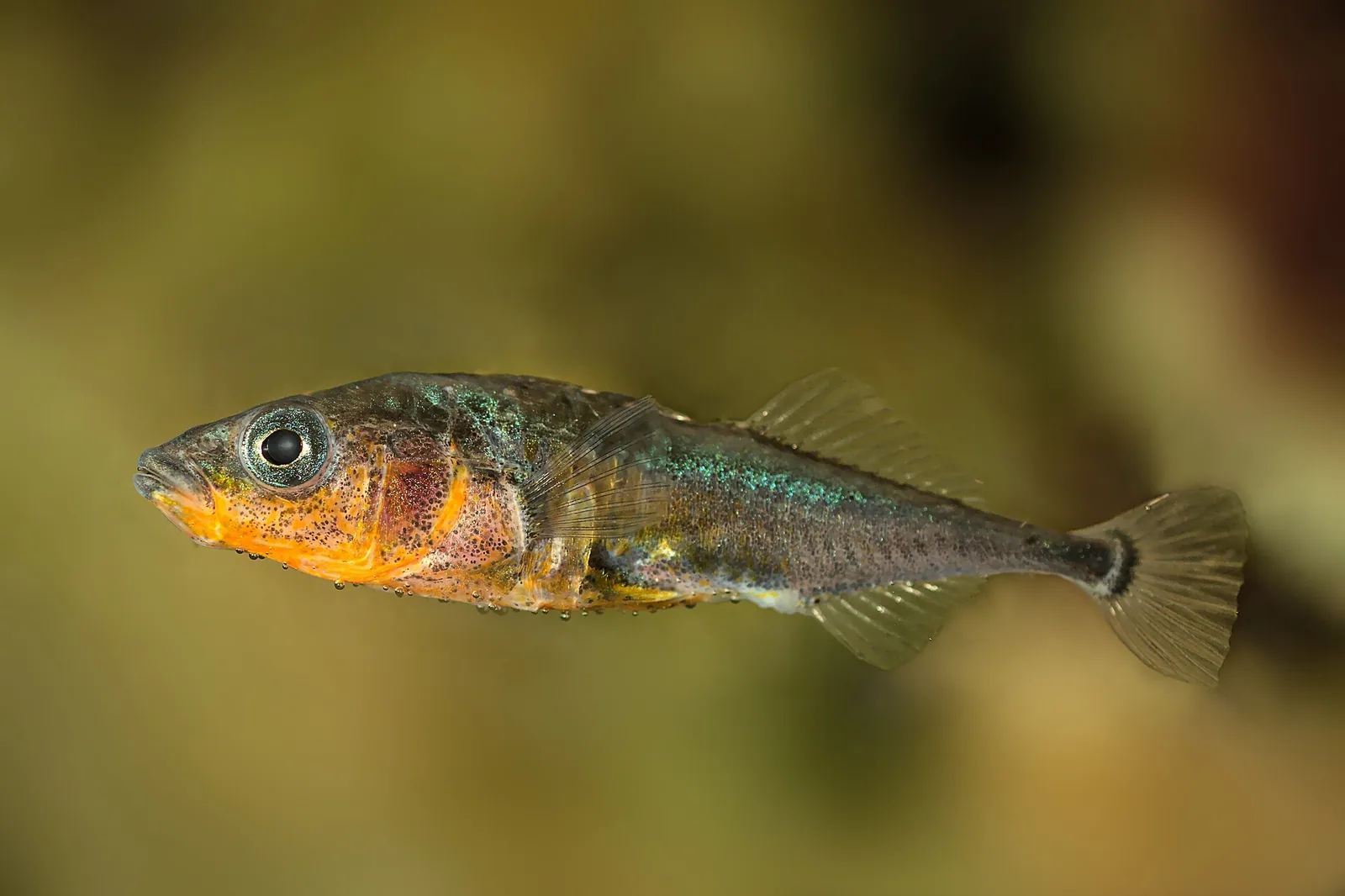
Picture a group of fish drawing closer together, their bodies pointing the same way. It is tempting to call that better teamwork. A University of Bristol study published on September 2, 2026, offers a more interesting answer: whether coordination helped depended on the water and the group. The subjects were three-spined sticklebacks, not a mixed community of aquarium fish.1
What changed before the food appeared?
Bristol reports that in cloudy water the fish generally moved closer and aligned more strongly before food appeared. Small groups were especially responsive to nearby fish. When the feeding opportunity arrived, however, cloudiness still slowed the response overall. The fish had adjusted their behavior; they had not made reduced visibility irrelevant.1
The paper puts numbers on that movement. Researchers examined the fishes' positions and orientations in the second before the food stimulus appeared. They also compared changes in swimming speed between neighbors during the preceding minute. In pairs in turbid water, fish responded to a neighbor's speed changes with less delay than in clear water; that difference was not evident in larger groups.2
When did tighter groups do better?
In small groups in turbid water, closer spacing and stronger alignment were associated with quicker attacks on the food stimulus. In larger groups in clear water, those same features were associated with slower responses. Cohesion describes how tightly the fish gather; polarization describes how similarly they orient. The study therefore separates two things a casual glance might bundle together as schooling.2
For us, the intriguing part is the reversal: a neat formation is not automatically the most effective one. This is an invitation to observe more carefully, not to cloud a home aquarium or add fish to reproduce a laboratory result. The experiment does not establish a stocking rule or a welfare score for aquarium species.2
Sources and notes 2 references
- University of Bristol — Muddying the waters makes fish more sociable, study finds (opens in a new tab)September 2, 2026
- Ioannou, Cordery and Rands, Proceedings of the Royal Society B — Plasticity in collective behaviour helps fish shoals mitigate limited visual information from water turbidity (opens in a new tab)September 2, 2026
Background: September 2, 2026. Published November 1, 2026.
Research and reporting dates are kept as published, and older work isn’t presented as news. Product claims are attributed to their makers. Photos are illustrative and don’t show store stock.