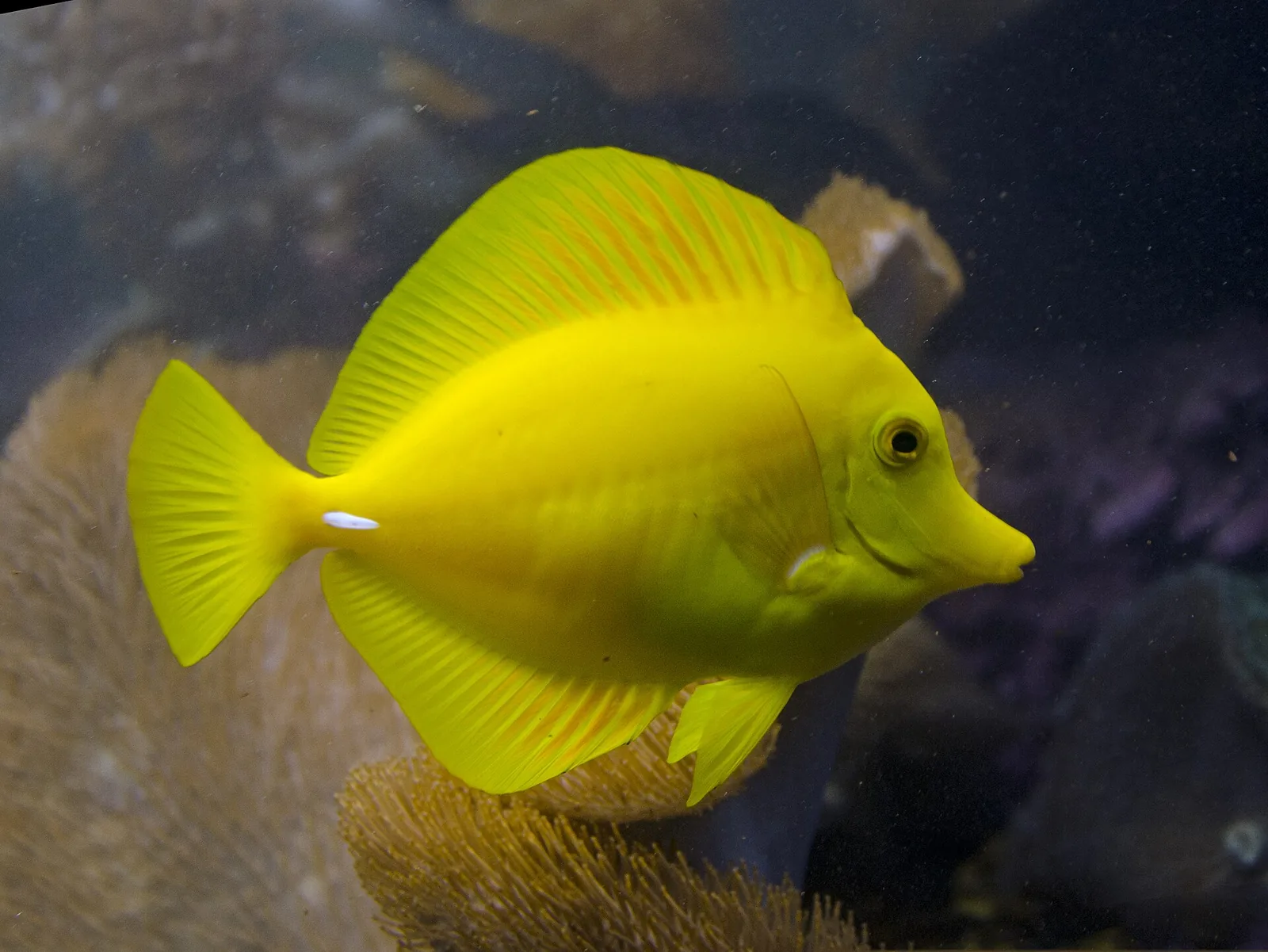
Hatcheries raising sought-after reef fish such as the yellow tang struggle to get enough larvae through to the juvenile stage. A study published in PeerJ on September 21, 2026, looked at one part of that early stage: the microbes in the gut. Researchers at Hawaiʻi Pacific University and its Oceanic Institute followed a single cohort in a recirculating system from hatching to 76 days, sampling the larvae, their food and the rearing water at eight points.12
The gut community changed with each stage of development, and its biggest swings lined up with changes in food. Bacteria of the genus Vibrio made up 97.2% of the gut sequences at 36 days and 94.2% at 55 days. Both peaks came when enriched Artemia brine shrimp were added to the diet.1
These are proportions from one cohort in one system. They show a timing pattern and do not establish a cause or any effect on the fish’s health. The authors say live foods may shape a young fish’s microbes and that the Vibrio species carried in feed need closer study.1
Sources and notes 2 references
- Deck et al. — Succession of the yellow tang (Zebrasoma flavescens) microbiome from hatch to settlement in a recirculating aquaculture system, PeerJ (opens in a new tab)Published September 21, 2026
- Hawaiʻi Pacific University — HPU Researchers Publish New Findings on Yellow Tang Development (opens in a new tab)October 7, 2026
Background: September 21, 2026 (PeerJ); October 7, 2026 (Hawaiʻi Pacific University). Published November 1, 2026.
Research and reporting dates are kept as published, and older work isn’t presented as news. Product claims are attributed to their makers. Photos are illustrative and don’t show store stock.