
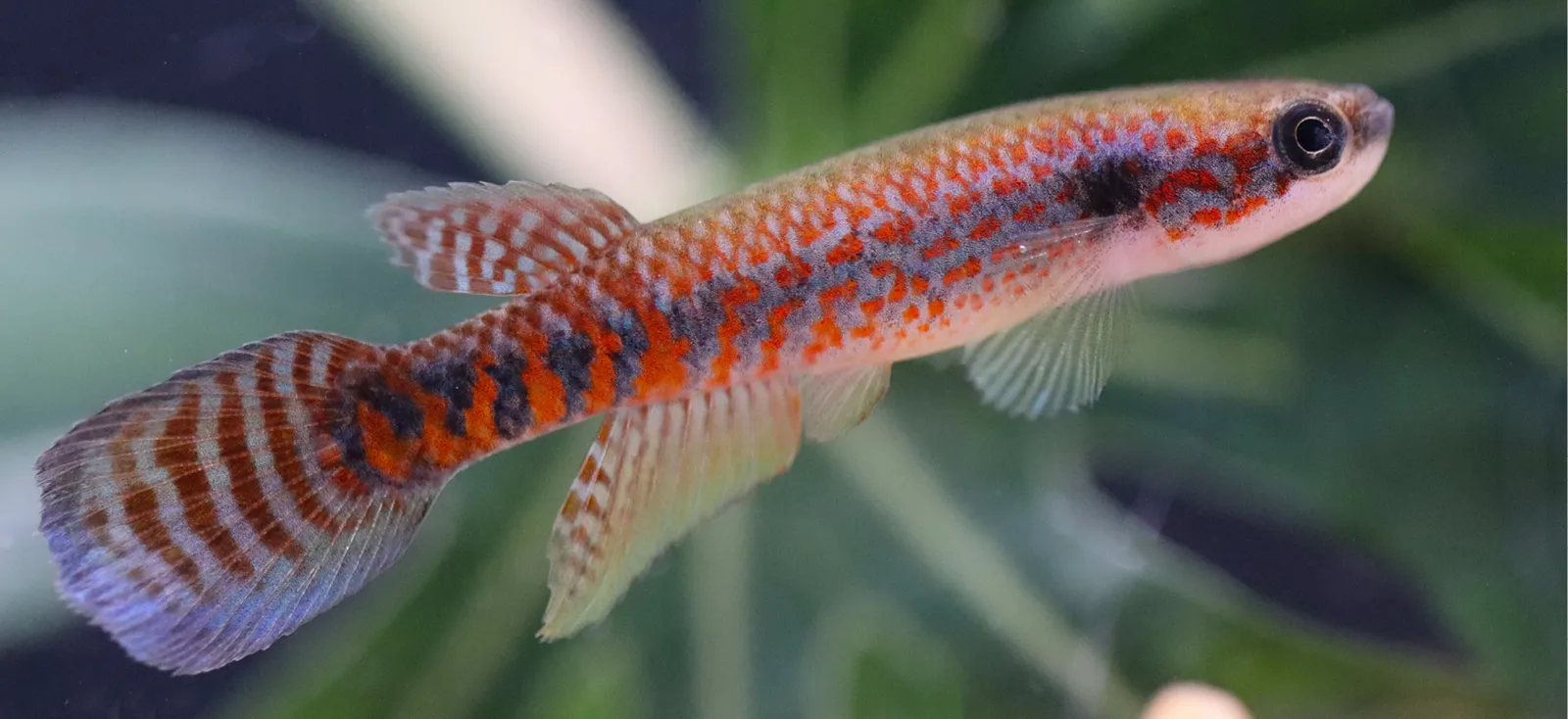
A small killifish with orange spots and chevron-shaped bars has a scientific name: Laimosemion laranja. Described in Zoosystematics and Evolution on August 20, 2026, it is known from three sites in Brazil’s Rio Cajari drainage. Researchers distinguished it using body features and mitochondrial DNA.1
The fish were collected in forest pools beside streams, among floating vegetation over sand or mud. The authors documented burned trees near one locality and habitat loss and plastic pollution at another. They recommend an Endangered classification under IUCN criteria and expanding the nearby Rio Cajari reserve. That is the researchers’ assessment, not a confirmed IUCN listing.1
The University of West Florida highlighted the discovery on October 22. Its account explains that laranja means orange in Portuguese and also honours Laranjal do Jari, where the fish was found. For killifish enthusiasts, this is a glimpse of a newly documented wild species and its vulnerable habitat; the announcement provides no aquarium-care or captive-breeding guidance. The species description predates that university report by two months.2
Sources and notes 2 references
- Abrantes et al.: A new killifish of the genus Laimosemion from Rio Cajari in the Brazilian Amazon, Zoosystematics and Evolution (opens in a new tab)Published August 20, 2026; full article XML and Figure 2 verified
- University of West Florida: UWF researcher leads discovery of new killifish species (opens in a new tab)October 22, 2026; university report on the August paper
Background: August 20, 2026 (Zoosystematics and Evolution); October 22, 2026 (University of West Florida). Published November 3, 2026.
Research and reporting dates are kept as published, and older work isn’t presented as news. Product claims are attributed to their makers. Photos are illustrative and don’t show store stock.